AFSS Sydney — How to Get Your Annual Fire Safety Statement Sorted Fast
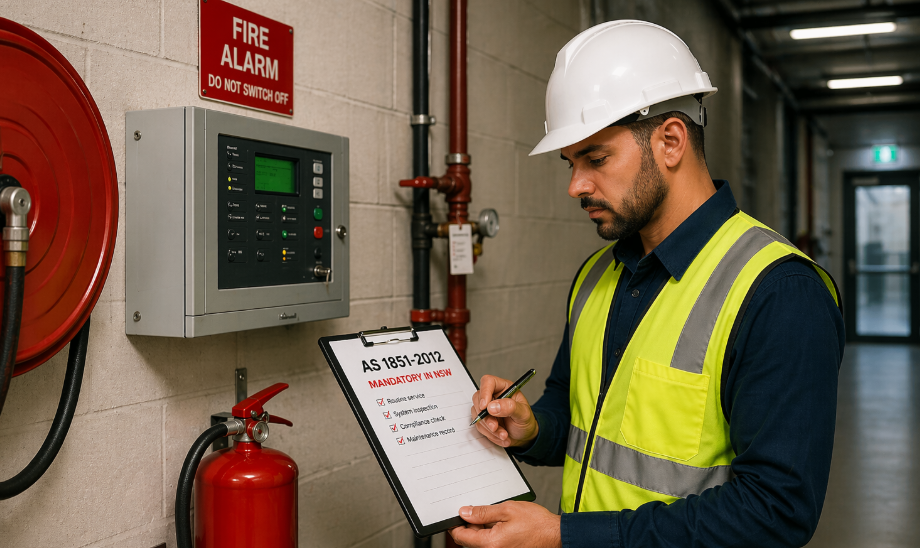
If you own or manage a commercial, industrial or strata building anywhere in Greater Sydney, you need an Annual Fire Safety Statement lodged with your local council and Fire & Rescue NSW every 12 months. No exceptions. Miss the deadline and you're looking at penalty notices starting at $1,000 per week — escalating to $4,000 per week by week four.
The problem most Sydney building owners run into isn't that they don't know they need an AFSS. It's that they don't know how to get one done properly, how much it should cost, or how to tell whether their current provider is actually qualified. This post covers all three.
What is an AFSS and who needs one in Sydney?
An Annual Fire Safety Statement is a legal certificate confirming that every essential fire safety measure in your building has been inspected, tested and maintained to the standard listed on your Fire Safety Schedule. It must be signed by an FSA-accredited Fire Safety Assessor or another practitioner recognised under NSW legislation.
You need an AFSS if your building has a Fire Safety Schedule — which covers most commercial offices, retail shops, warehouses, factories, strata apartment buildings, mixed-use developments, shopping centres, hotels, and aged care facilities across Sydney. Single residential dwellings (houses) are generally exempt unless they've been modified under a development consent that triggered fire safety requirements.
How much does an AFSS cost in Sydney?
AFSS pricing varies depending on building size, complexity and the number of essential fire safety measures on your schedule. As a guide:
Small commercial or retail premises — from $375 + GST. Warehouses and industrial sites — from $495 + GST. Multi-storey, strata or complex buildings — from $725 + GST.
Be cautious of providers advertising AFSS services for under $200. At that price point, the inspection is unlikely to cover every measure on your schedule to the standard required under AS 1851-2012. A cheap AFSS that doesn't hold up under council scrutiny costs you far more in the long run than paying for a thorough inspection upfront.
For a firm quote based on your actual Fire Safety Schedule, see our pricing page or call 1300 347 372.
We had a commercial building owner in Bankstown contact us after running into exactly this problem. They'd engaged an unaccredited provider to inspect and test all their fire equipment — extinguishers, hose reels, emergency lighting, the lot. The work was done, the invoices were paid, and the owner assumed their AFSS was sorted. But when it came time to sign and lodge the statement, the provider couldn't issue it because they weren't FSA-accredited and had no legal authority to certify the AFSS under NSW legislation. The owner had to engage us to re-inspect the entire building from scratch, pay for the assessment a second time, and lodge late. What should have been a single straightforward inspection turned into double the cost and a delayed lodgement that put them at risk of penalty notices from Canterbury-Bankstown Council. It's one of the most common and most avoidable mistakes we see, always check the FPAS register before you engage anyone.
How to find an FSA-accredited assessor in Sydney
Not everyone who offers fire safety inspections is qualified to sign an AFSS. In NSW, only an FSA-accredited Fire Safety Assessor — or another practitioner recognised under the Environmental Planning and Assessment (Development Certification and Fire Safety) Regulation 2021 — can legally certify your statement.
Before engaging anyone, ask for their FSA accreditation number and verify it on the public FPAS register at fpaa.com.au. If they can't give you a number, or the number doesn't appear on the register, walk away.
Other things to check: do they carry professional indemnity and public liability insurance? Will they provide a written scope of works before the inspection? Do they issue a proper defect report with photos if problems are found? And critically — do they inspect every measure on your schedule, or do they skip items they're not equipped to test?
What happens during an AFSS inspection?
A proper AFSS inspection covers every essential fire safety measure listed on your Fire Safety Schedule. For a typical Sydney commercial building, that includes portable fire extinguishers, fire hose reels, fire hydrant systems, smoke detection, emergency and exit lighting, fire doors, exit paths, and mechanical ventilation in fire mode.
The assessor physically inspects and tests each system against the standard of performance listed on your schedule. Since 13 February 2026, those maintenance standards must comply with AS 1851-2012 — which specifies monthly, six-monthly and annual inspection frequencies depending on the system type.
If defects are found, the assessor issues a defect report detailing what failed, why it failed, and what needs to be done to rectify it. The AFSS cannot be issued until all defects are cleared. Once everything passes, the assessor signs the AFSS and you lodge it with your council and Fire & Rescue NSW.
One of the most common defects we find during Sydney AFSS inspections is emergency lighting that hasn't been discharge-tested. Building owners assume that because the lights are on, they're working — but under AS 2293, emergency lighting must hold its charge for 90 minutes under full discharge. When we run the test, batteries that are three or four years old regularly fail within 20 minutes. The building owner then needs to replace every failed battery or fitting before we can sign off the AFSS. On a multi-storey building with 40 or 50 emergency light fittings, that's a significant unexpected cost that could have been avoided with routine six-monthly testing throughout the year.
How to lodge your AFSS in Sydney
Once your AFSS is signed, you must lodge a copy with two parties:
Your local council — most Sydney councils now accept lodgement through their online portal. You'll need to upload the signed AFSS along with a copy of your current Fire Safety Schedule.
Fire & Rescue NSW — lodge through the online submission form at fire.nsw.gov.au. There is no lodgement fee.
A copy of both the AFSS and Fire Safety Schedule must also be prominently displayed in the building — typically in the fire control room, building entrance, or main switchboard area.
If you're unsure which council covers your building, check by suburb. We service buildings across Parramatta, Blacktown, Liverpool, Penrith, Canterbury-Bankstown, Cumberland, Fairfield, and the Inner West — and we include a step-by-step lodgement guide with every AFSS we issue.
What happens if you don't lodge on time?
The penalties for missing your AFSS deadline are severe. Councils can issue penalty infringement notices starting at $1,000 in the first week, escalating each week. Fire & Rescue NSW can serve Fire Safety Orders requiring immediate rectification of non-compliant measures. In serious cases, matters can be referred to the Land and Environment Court where fines of up to $110,000 can be imposed.
Beyond fines, an expired or missing AFSS can affect your building insurance, create liability issues in the event of a fire, and make it difficult to sell or lease the property.
The bottom line for Sydney building owners
Getting your AFSS sorted isn't complicated if you engage the right provider. Find an FSA-accredited assessor with a verifiable accreditation number. Get a firm quote based on your actual Fire Safety Schedule — not a generic estimate. Make sure every measure on your schedule gets inspected, not just the easy ones. And lodge on time, every time.
Disclaimer: This article is intended for general informational purposes only. It does not constitute legal advice. Building owners should seek independent professional advice regarding their specific compliance obligations.
Need your AFSS sorted? Call 1300 347 372 or start the process online. We'll scope your inspection and provide a firm quote within one business day.