Why Australian Emergency Lights Must Run for 90 Minutes — AS/NZS 2293 Explained for NSW Building Owners
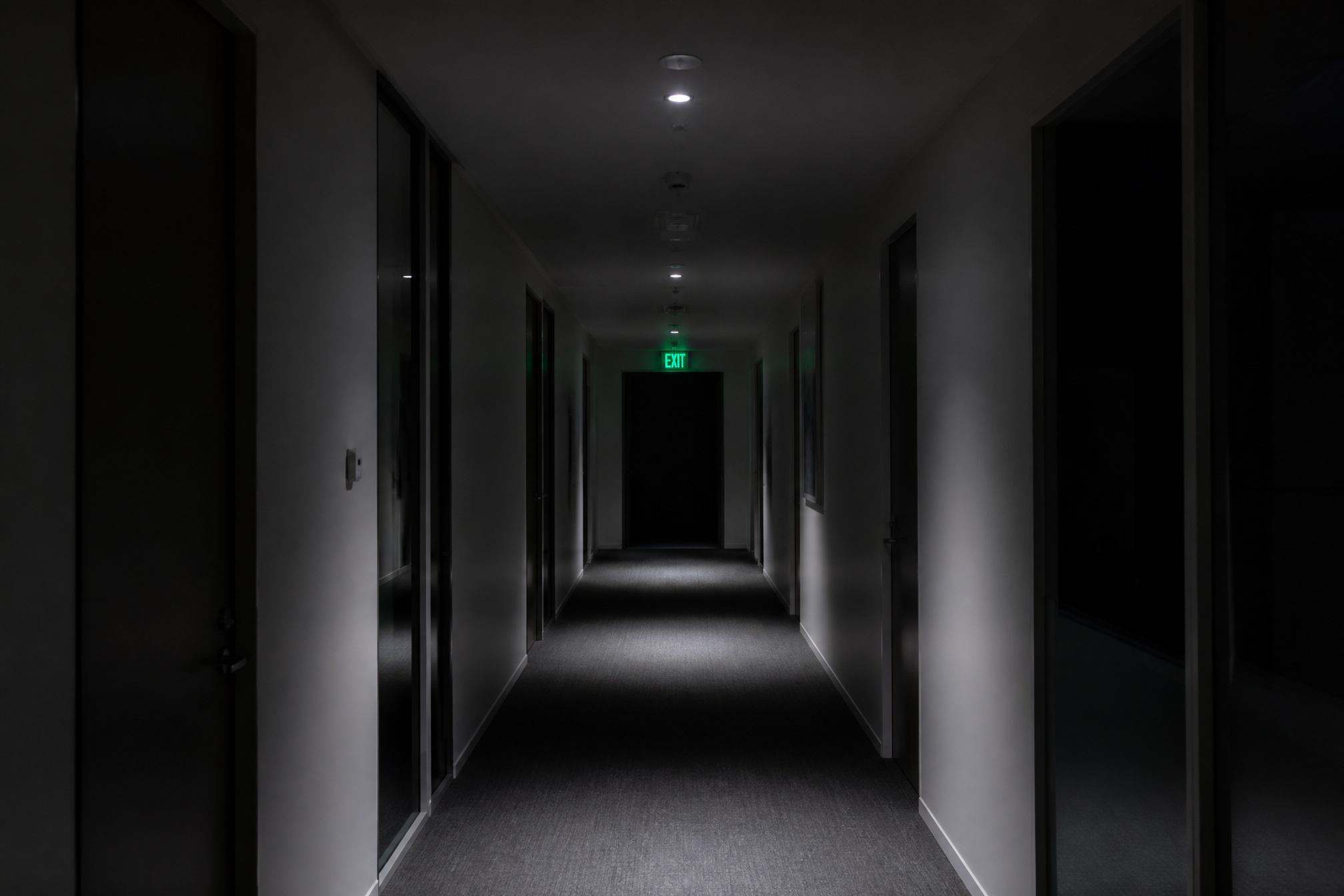
If you manage a commercial, industrial, or multi-residential building anywhere in Western Sydney — whether that's a mixed-use strata in Parramatta, a warehouse precinct in Blacktown, or an aged care facility in Liverpool — your emergency lighting system is one of your most legally scrutinised fire safety measures. And one number sits at the heart of every compliance audit: ninety minutes. Emergency lighting systems in Australia must operate for a minimum of 90 minutes following mains power failure, as required by AS/NZS 2293. But understanding why that figure exists, what the standard actually demands of your building, and how it connects to your Annual Fire Safety Statement obligations — that's where most building owners come unstuck. This article explains it all, plainly and professionally.
What Is AS/NZS 2293 and Why Does It Govern Your Building?
In my experience working across fire safety compliance in NSW, no single standard causes more confusion among property managers than AS/NZS 2293 — largely because most people assume it's one document when it's actually three. Emergency and exit lighting in Australian buildings is governed by AS/NZS 2293, which has three parts: Part 1 covers system design, installation and operation; Part 2 covers inspection and maintenance; and Part 3 covers the luminaires and exit signs themselves.
AS 2293 was formally adopted as a separate emergency lighting standard in 1979, and the AS 2293 series has since been revised in 1983, 1987, 1995, 2005, 2018 and 2021, and is currently under review for another update. The version that applies to your building depends on when it was constructed or last substantially altered — a detail that catches many strata committees off guard during audits.
The National Construction Code (NCC, formerly the BCA) references AS/NZS 2293 as the compliance pathway for emergency lighting in Class 2 through Class 9 buildings — covering apartments, offices, shops, industrial buildings, hospitals, schools, hotels and aged care. Part E4 of the BCA requires a level of visibility and directional signage to enable safe exit of the building, and it refers to the AS/NZS 2293 series for detailed information on design, installation, operation, service and maintenance. In practical terms: if your building has employees, residents, or members of the public moving through it, AS/NZS 2293 almost certainly applies.
The 90-Minute Rule: Where It Comes From and What It Actually Means
From my professional experience, the 90-minute requirement is the compliance detail most commonly misunderstood — and most dangerously underestimated. Building managers sometimes assume that if a green charging light is illuminated on a fitting, the system is compliant. That assumption is wrong, and I've seen it cause buildings to fail their Annual Fire Safety Statement assessments.
The green light means the charger is working — it tells you nothing about whether the battery behind it will actually run the lamp for 90 minutes when the mains drops out. That is precisely the distinction AS/NZS 2293 is designed to enforce.
AS/NZS 2293.1 requires emergency luminaires to operate at rated output for a minimum of 90 minutes after mains failure, then recharge to 90% capacity within 24 hours. That 90-minute figure comes from fire evacuation modelling — it represents the time needed to evacuate a building during a fire event. This isn't an arbitrary bureaucratic threshold. It reflects the realistic worst-case scenario for large, complex buildings where lifts are unavailable, smoke is present, and occupants with mobility limitations may need significant time to reach safety. For a multi-storey commercial tower in Penrith CBD or a large strata complex in Fairfield, 90 minutes of reliable illumination along the egress path is not excessive — it is the minimum margin of safety that fire engineers have determined is necessary.
The standard also specifies minimum illumination levels along the egress path — typically 0.2 lux minimum with a 0.5 lux average across paths of travel, and at least 1 lux in stairways. Duration and illumination intensity are both non-negotiable.
Which Buildings Are Required to Comply — and Where Emergency Lights Must Be Installed
A question I'm regularly asked by strata committees and owners corporations across Western Sydney LGAs is: "Does this standard actually apply to my building?" The answer, in the vast majority of cases, is yes.
Any government or commercial building accommodating employees, customers, or the public, as well as common areas in multi-residential buildings, necessitates the installation of emergency lighting. The NCC sets out specific thresholds for where, within a building, emergency lighting must be physically installed:
Emergency lighting is required in every storey with a floor area over 300 m² in a Class 5–9 building, including every passageway, corridor, hallway, or similar forming part of a path of travel to an exit.
Any room larger than 100 m² which does not open to a corridor or other space containing emergency lighting, or a road or open space — and any room larger than 300 m².
Every required non-fire-isolated stairway in the building.
Exit signs must be clearly visible to occupants at all times, installed directly above exit doors, at the top of staircases, and at any change of direction along the egress route to a final exit or evacuation point.
There are different obligations under the Regulations depending on when the building was constructed or when relevant building work occurred. In general terms, Class 6 buildings (shops and similar) built after 1 July 1994 have specific exit and emergency lighting requirements, and most Class 6 buildings require at least one exit sign. For older buildings in areas like Cumberland or Canterbury-Bankstown — where a significant proportion of the commercial stock predates the 1990s — verifying which version of the standard applies is a critical first step.
Maintained vs. Non-Maintained Systems: Understanding the Two Modes
AS/NZS 2293 recognises two fundamental types of emergency lighting system, and in my professional opinion, the distinction between them is one the building owners I work with most frequently overlook when assessing their existing infrastructure.
| System Type | How It Operates | Typical Application | 90-Minute Requirement |
|---|---|---|---|
| Maintained | Lamp runs continuously at all times, including during normal operation | Cinemas, theatres, public assembly buildings | Yes — applies equally |
| Non-Maintained | Lamp only activates upon mains power failure | Commercial offices, industrial facilities, strata common areas | Yes — applies equally |
| Combined/Sustained | Hybrid operation — some lamps maintained, others non-maintained | Mixed-use or complex building configurations | Yes — applies equally to all emergency luminaires |
Maintained lamps run continuously and are often used in cinemas and theatres; non-maintained lamps only operate on mains failure and are used in most commercial buildings. Both have the same 90-minute requirement. This is a critical point: the mode of operation does not reduce the battery endurance obligation. A non-maintained fitting in a Blacktown warehouse must sustain 90 minutes of illumination just as surely as a maintained fitting in a Parramatta theatre.
Self-contained systems feature individual battery backup per unit, with each unit operating independently. In buildings where a central battery system is not installed, every individual fitting carries its own battery — which means every individual battery must pass the full duration test.
The AS/NZS 2293 Testing and Maintenance Schedule: What Building Owners Must Do
Compliance with AS/NZS 2293 is not a one-time installation exercise. It is an ongoing maintenance obligation, and in NSW, it feeds directly into your Annual Fire Safety Statement. From my experience auditing buildings across Western Sydney, poor maintenance scheduling — not faulty equipment — is the most common reason emergency lighting systems fail assessment.
The standard prescribes rigorous testing intervals, covering monthly, six-monthly, annual, and long-term end-of-life checks, alongside meticulous record-keeping requirements. Here is what each interval requires in practice:
Monthly: A brief functional test of each illuminated sign and emergency fitting to confirm it activates when mains power is interrupted.
Six-monthly: AS/NZS 2293.2 sets routine service. The headline requirement is a six-monthly 90-minute discharge test for all emergency and exit lights, performed by a competent person and recorded in the logbook.
Annually: A full system inspection building on the six-monthly discharge testing, assessing lux levels, mounting positions, signage visibility, and system integrity.
Long-term end-of-life review: A comprehensive assessment of luminaires and exit signs as they approach the manufacturer's specified service life — typically anywhere from 5 to 15 years depending on battery chemistry and fitting type — to determine whether replacement is required.
All emergency lighting systems need to be serviced and tested every six months by a competent professional, and records kept for a minimum of seven years. AS/NZS 2293 also dictates that every building must keep a logbook detailing the installation, testing, and maintenance of its emergency lighting. These records, typically maintained in paper or digital logbooks for a minimum of seven years, are indispensable for demonstrating ongoing compliance.
A competent testing person is not simply anyone with an interest in the topic. All testing must be performed by licensed fire technicians. Six-monthly and annual testing is not as easy as it may seem — the technician must also understand AS/NZS 2293 Part 1 and the environment in regard to lux readings.
How Emergency Lighting Compliance Connects to Your Annual Fire Safety Statement in NSW
For building owners and strata committees in New South Wales, the emergency lighting obligations under AS/NZS 2293 are not standalone — they are formally embedded in the Annual Fire Safety Statement (AFSS) regime. This is the connection that carries the most significant legal weight, and it's the one I most frequently find building owners underestimating.
An Annual Fire Safety Statement (AFSS) is a mandatory legal declaration required under the Environmental Planning and Assessment (Development Certification and Fire Safety) Regulation 2021 for most commercial, industrial, and multi-residential buildings across New South Wales. The statement confirms that an accredited practitioner (fire safety) has assessed, inspected and verified the performance of each fire safety measure that applies to the building.
Emergency lighting — including its 90-minute battery endurance — is listed as an essential fire safety measure on most buildings' Fire Safety Schedules. The AFSS regime exists to confirm that every essential fire safety measure installed in a building has been inspected, tested, and assessed as capable of performing to the standard specified in the building's Fire Safety Schedule. That means if your emergency lights cannot demonstrate 90-minute endurance at the time of assessment, your AFSS cannot be truthfully signed off — and your building is in breach of NSW planning legislation.
The Environmental Planning and Assessment (Development Certification and Fire Safety) Regulation 2021 establishes maximum penalties that can be imposed by courts, while councils also have authority to issue on-the-spot penalty infringement notices for many offences. Understanding this framework helps building owners appreciate the serious legal and financial exposure they face when deadlines are missed or systems are neglected.
Common Mistakes Western Sydney Building Owners Make — and How to Avoid Them
Over the course of my career servicing buildings across Parramatta, Blacktown, Liverpool, Penrith and the Cumberland area, I've seen the same compliance failures surface repeatedly. Many of them are avoidable with proper understanding of AS/NZS 2293.
Mistake 1: Assuming the green charging light means compliance. As noted earlier, walk through most commercial buildings and you'll see a green light glowing on every emergency fitting. Facility managers point to those lights as proof of compliance. They're not. The green light means the charger is working — it tells you nothing about whether the battery behind it will actually run the lamp for 90 minutes when the mains drops out.
Mistake 2: Using non-equivalent replacement fittings. Replacement of an existing exit and emergency fitting with one that is not equivalent — without first ensuring that the classification of the new installation is equivalent to or exceeds the pre-existing fitting — puts the building at risk of being non-compliant with the requirements set in Sections E4.2 and E4.5 of the Building Code of Australia.
Mistake 3: Poor logbook discipline. You may face substantial fines if you cannot provide proper records during a fire safety audit. Many of the strata committees I've worked with in Western Sydney have years of testing done — but no consistent logbook. When the council or Fire and Rescue NSW comes knocking, the paperwork matters as much as the hardware.
Mistake 4: Blocked or obstructed exit signage. Blocked or ambiguous signage is a common failure point — decorations, banners, shelving, or roller shutters can block sightlines. Signs must remain visible from all points along the egress path. In retail and warehouse settings across Fairfield and Blacktown, seasonal fit-outs and racking changes are frequent culprits.
Mistake 5: Incorrect sign mounting heights. Signs hung below 2 m or too high above 2.7 m can fail inspection. Align with door heads where required. This is a surprisingly common defect in buildings where internal renovations have been carried out without fire safety sign-off.
Frequently Asked Questions
Does the 90-minute requirement apply to both exit signs and general emergency luminaires?
Exit and emergency lighting provides illumination for occupants to safely exit a building when normal lighting has failed due to power loss. Each exit and emergency luminaire is fitted with a battery and is required to provide light for at least 90 minutes after the power fails. Both exit signs and area emergency lighting fittings are subject to this endurance requirement under AS/NZS 2293, though they serve different functions within the egress system. Exit signs must also remain continuously illuminated at all times under normal operating conditions, not just during a power failure.
How often does my building need the full 90-minute discharge test performed?
During six-monthly servicing, all self-contained battery-powered emergency luminaires undergo a duration test to ensure they remain well-lit for a minimum of 90 minutes. Any luminaires which fail have their batteries or the whole fitting replaced. This six-monthly discharge test is the primary mechanism for demonstrating ongoing compliance, and the results must be recorded in a maintained logbook. Monthly functional tests are also required but do not substitute for the six-monthly full duration test.
Who is allowed to perform AS/NZS 2293 testing in NSW?
An appropriately qualified person such as a licensed electrician should be used to test and inspect the components of any style of emergency lighting system. The AS/NZS 2293 standard includes requirements for testing of circuits and sensing of supply to the test facility, which can only be performed by someone with the suitable qualifications. In NSW, the practitioner performing testing and signing off the results for AFSS purposes must be an Accredited Practitioner (Fire Safety) — commonly referred to as an APFS — recognised under the NSW planning and fire safety framework. Monthly checks may be performed by building managers, but the formal six-monthly and annual testing requires a qualified professional.
What happens if my building's emergency lights fail the 90-minute test during the AFSS assessment?
From my experience, failed duration tests are one of the most common reasons an AFSS cannot be completed on schedule. If luminaires fail the 90-minute discharge test, the defective batteries or entire fittings must be replaced and the affected units re-tested before the AFSS can be certified. Emergency exit lighting requirements in Australia are governed by strict regulations in AS/NZS 2293 — and for good reason. Without compliant systems in place, buildings expose occupants to serious risks and owners to potential legal consequences. Failing to meet AS/NZS 2293 standards means compliance cannot be demonstrated, and the building is at risk of regulatory action. Engaging your fire safety practitioner well in advance of your AFSS due date — ideally with a six-monthly service interval — avoids last-minute defect discovery and the costly rush remediation work that typically follows.
Disclaimer: This article is intended for general informational purposes only and does not constitute legal advice. It provides general information about NSW emergency lighting requirements under AS/NZS 2293 and the Annual Fire Safety Statement framework. Building owners, strata committees, and facility managers should seek independent professional advice regarding their specific compliance obligations, including the applicable version of the standard for their building and the requirements of their individual Fire Safety Schedule.
Book Your Emergency Lighting Compliance Review with Fire Safe Today
Understanding the 90-minute requirement is one thing — demonstrating it in a fully documented, audit-ready logbook that supports your Annual Fire Safety Statement is another. If your building's emergency lighting testing is overdue, inconsistent, or you're simply unsure whether your current arrangements satisfy AS/NZS 2293 and your Fire Safety Schedule, Fire Safe can help.
Fire Safe is Western Sydney's specialist fire safety compliance provider, serving building owners, strata committees, owners corporations, and facility managers across Parramatta, Blacktown, Penrith, Liverpool, Canterbury-Bankstown, Cumberland, and Fairfield. Our Accredited Practitioners (Fire Safety) conduct thorough AS/NZS 2293 emergency lighting assessments — including full 90-minute discharge testing, lux verification, exit sign inspection, and logbook documentation — as part of a complete Annual Fire Safety Statement inspection service.
Don't wait for a council notice or a failed AFSS to discover your emergency lighting system isn't where it needs to be. Contact Fire Safe today by calling 1300 347 372 or using the contact form on this page to book your Annual Fire Safety Statement inspection. Our team will assess your emergency lighting compliance, identify any defects, and help you meet your obligations with confidence — before your deadline, not after it.