Self-Contained vs Central Battery Emergency Lighting: Which System Is Right for Your Western Sydney Building?
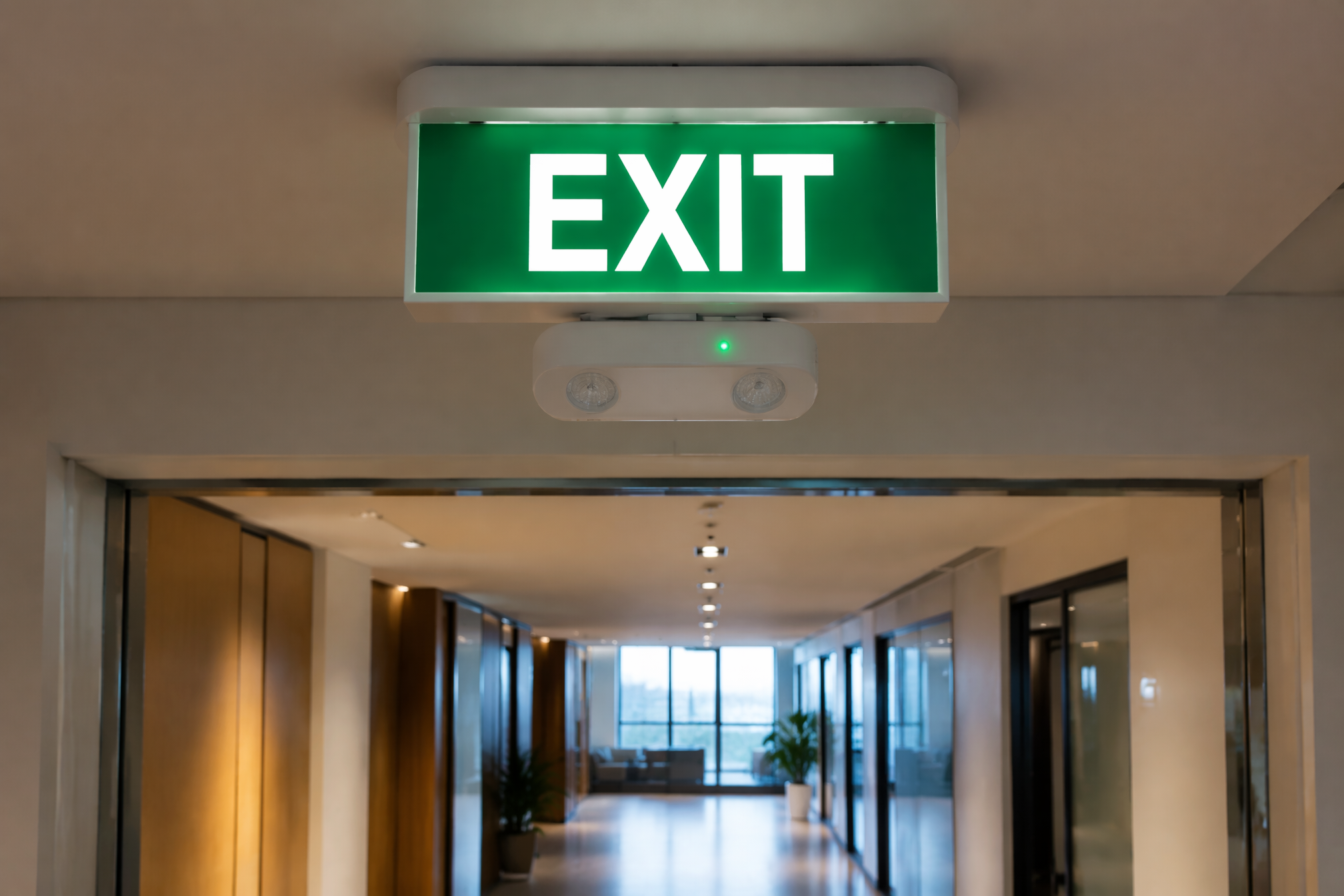
When the power fails and smoke fills a corridor, emergency lighting is the difference between a safe evacuation and a catastrophe. Yet in my years working across fire safety compliance in Western Sydney — from ageing strata blocks in Parramatta to large mixed-use developments in Blacktown and Penrith — I've found that building owners and strata committees frequently inherit an emergency lighting system without really understanding what they have, or what it demands of them. The choice between self-contained vs central battery emergency lighting systems affects your upfront costs, your ongoing maintenance obligations under AS/NZS 2293, and critically, your ability to certify your Annual Fire Safety Statement (AFSS) each year. This article breaks down exactly what each system is, what the law requires, and how to decide which approach is appropriate for your building type.
What the Australian Standard Actually Requires
AS/NZS 2293 is the Australian and New Zealand standard that sets out the requirements for emergency escape lighting and exit signage systems, providing detailed guidelines on the design, installation, operation, and maintenance of these systems. It is not a voluntary guideline. The National Construction Code references it directly, and state fire authorities enforce it. It is a legal requirement for most commercial, industrial, and public buildings, and non-compliance carries real penalties.
AS 2293 was formally adopted as a separate emergency lighting standard in 1979. Since then, the AS 2293 series has been revised in 1983, 1987, 1995, 2005, 2018, and 2021, and is currently under review for another update. For new builds, new work must comply with the latest NCC (BCA 2022), referencing AS/NZS 2293.1:2018+A1:2021, AS/NZS 2293.2:2019, and AS/NZS 2293.3:2018+A1:2021. The standard is structured across three parts: Part 1 sets design, installation and operation rules; Part 2 sets routine service and maintenance; and Part 3 sets the product performance requirements for emergency luminaires and exit signs.
The performance benchmark that every system — regardless of type — must meet is clear: emergency lighting systems in Australia must operate for a minimum of 90 minutes following mains power failure, as required by AS/NZS 2293. It requires exit paths to be illuminated at a minimum of 0.2 lux (average 0.5 lux) for 90 minutes after mains power failure, with stairwells requiring at least 1 lux. Get this wrong, and in my professional opinion, you are not just risking a fine — you are risking lives and unlimited liability exposure for your owners corporation or company.
Understanding Self-Contained Emergency Lighting Systems
Self-contained systems, also known as single-point systems, have individual batteries within each emergency light unit. Each fitting is entirely independent — it charges from the mains circuit it is connected to, and when that circuit drops, the internal battery activates the lamp automatically. Most Australian buildings use self-contained fittings with a battery built into each luminaire. This is simpler to install and does not need a dedicated battery room.
From my experience, self-contained systems dominate the Western Sydney market precisely because they suit the stock of buildings we have here: older mid-rise strata blocks in suburbs like Auburn, Merrylands, and Fairfield that were built before central battery technology became cost-effective. The installation process is straightforward and less complex than central battery systems — particularly beneficial for retrofitting existing buildings. AS/NZS 2293 Part 1 allows central-battery, single-point, or self-contained systems. Self-contained units must include a test switch and a battery isolation facility to enable safe servicing.
The maintenance trade-off, however, is real and often underestimated. Emergency lighting batteries degrade over time. Nickel-cadmium batteries lose capacity gradually. LiFePO4 (lithium) batteries hold their capacity longer but can fail suddenly. Budget for full system battery replacement every 8 to 10 years. Replacing batteries in self-contained fittings means accessing every fitting individually — in a building with 60 or 80 fittings spread across six floors, this is a significant labour cost every service cycle. I have seen strata committees in Blacktown and Penrith genuinely shocked when they receive the bill for a building-wide battery replacement on a system nobody had properly managed for a decade.
Understanding Central Battery Emergency Lighting Systems
Central battery systems consist of a single, central power source that supplies electricity to all emergency lights within a building. This setup can be highly efficient for large buildings or complexes. Rather than each luminaire housing its own battery, the fittings are wired back to a dedicated battery bank — typically housed in a fire-rated electrical room — via fire-rated cabling. The central battery emergency lights must be connected to the battery with fire-rated cables.
Central battery systems feed multiple fittings from one location, which makes monitoring easier in large buildings but adds cabling and a fire-rated battery room. In my professional opinion, this architecture makes the most sense in buildings where you have a large number of fittings concentrated on multiple floors — think a commercial office tower in Parramatta CBD or a large manufacturing facility in Wetherill Park. Central battery systems need one replacement but at a higher unit cost. The upfront capital outlay is considerably higher: a central battery system typically adds a substantial premium — often in the range of $15,000–$30,000 for the central unit and sub-circuits — above what a self-contained approach would cost in comparable buildings.
Central battery configurations are activated by transfer switches that work across the whole building and turn on all emergency lights that are linked at the same time. One practical advantage I've observed is the simplified testing process: instead of a technician manually operating test buttons on every individual fitting across a large floor plate, the central system can be tested from a single point. Specialist skills are needed to maintain central battery systems, and building owners should factor this into their total cost of ownership when making a decision.
Side-by-Side Comparison: Key Compliance and Operational Factors
In my experience, nothing cuts through the noise faster than a clean comparison. The table below compares self-contained and central battery systems across the factors that matter most to building owners, strata committees, and facility managers making a compliance-driven decision. Both system types are legally compliant under AS/NZS 2293 when properly installed and maintained — the decision comes down to building-specific factors.
| Factor | Self-Contained System | Central Battery System |
|---|---|---|
| AS/NZS 2293 Compliance | Fully compliant when installed and maintained correctly | Fully compliant when installed and maintained correctly |
| Typical Application | Buildings with fewer than ~50 fittings; retrofit/strata | Buildings with 100+ fittings; large commercial/industrial |
| Installation Complexity | Lower — no dedicated battery room or fire-rated sub-circuits required | Higher — requires fire-rated cabling and dedicated battery enclosure |
| Upfront Capital Cost | Lower per fitting; no central plant cost | Higher; central unit alone can add $15,000–$30,000 |
| Battery Maintenance | Each fitting accessed individually; labour-intensive at scale | Single battery bank replaced at one location |
| Battery Replacement Cycle | Typically every 4–6 years per fitting (varies by chemistry) | Typically every 5–15 years depending on battery type |
| Fault Redundancy | High — one failed fitting does not affect others | Single point of failure risk if central unit fails |
| Testing Logistics (AS/NZS 2293.2) | Each fitting tested individually or via automated self-test units | Centralised testing; more efficient in large buildings |
| Specialist Skills Required | Licensed electrician; lower technical complexity | Specialist skills required for maintenance and fault diagnosis |
| Suitability for Retrofit | Excellent — minimal structural change required | Challenging — requires routing of fire-rated cable runs |
| AFSS Impact | Must demonstrate compliant testing records per AS/NZS 2293.2 | Must demonstrate compliant testing records per AS/NZS 2293.2 |
The Mandatory Maintenance Regime Under AS/NZS 2293 and Why It Affects Your AFSS
Here is where I see building owners and strata committees in Western Sydney get into serious trouble: they assume that because their system was installed correctly, compliance is assured. It is not. Installation of an emergency lighting system is not enough for achieving compliance. The system must be tested for its performance and functionality, and any faults observed — such as with batteries, fittings, or control systems — must be rectified to ensure the system functions correctly during an emergency.
The standard mandates a maintenance schedule including monthly visual checks, six-monthly 90-minute discharge tests, and annual inspections, all of which must be documented and retained on-premises. A logbook must stay on site and records must be kept for 7 years. This is not paperwork for its own sake — it is the evidentiary foundation of your AFSS. If your emergency lighting fails its 90-minute test and you do not rectify the issues, an Accredited Practitioner (Fire Safety) cannot sign off on your Annual Fire Safety Statement (AFSS).
Building owners are legally required to submit an AFSS to their local council and Fire and Rescue NSW every 12 months. This statement must certify that all essential fire safety measures installed in the building, including emergency escape lighting, have been maintained. Non-compliance with these legislative requirements can result in significant financial penalties under the Environmental Planning and Assessment Act 1979 and its associated Regulation, as well as potential legal action. In my professional opinion, those exposures should focus the mind of any property manager or strata committee.
Which System Suits Your Western Sydney Building?
From my experience across Western Sydney's diverse building stock, the right system choice comes down to four key questions. How large is the building? How many fittings does it require? Is this a new build or a retrofit? And what is the long-term operational budget?
The following considerations are worth bearing in mind:
Strata residential buildings (Class 2) in suburbs like Merrylands, Fairfield, or Auburn: Self-contained systems are almost always appropriate. They are easier to retrofit into existing ceiling voids, require no dedicated electrical room, and individual fitting faults don't compromise the whole system's operation.
Small-to-medium commercial buildings and offices: Self-contained costs less upfront and suits buildings under 50 fittings. For typical suburban commercial premises in Blacktown or Liverpool, this is usually the right call.
Large commercial, industrial, and mixed-use buildings: Central battery saves on long-term maintenance in large buildings (100+ fittings) but adds a substantial premium for the central unit and sub-circuits. For a large logistics facility in Wetherill Park or a multi-tenancy office building in Parramatta CBD, the centralised monitoring and reduced per-cycle maintenance costs can justify this premium over time.
Existing buildings undergoing minor upgrades: If upgrading lighting without triggering a Development Application (DA), emergency lighting need only maintain its original compliance level. Changing system types entirely may trigger additional compliance requirements — get advice before committing.
New builds under NCC 2022: The latest NCC (BCA 2022) explicitly references AS/NZS 2293.1:2018+A1:2021, AS/NZS 2293.2:2019, and AS/NZS 2293.3:2018, specifying that compliance with these particular versions of the standard is a legal obligation for all new projects.
Heritage or architecturally sensitive buildings: Self-contained fittings with a smaller physical footprint are typically less invasive to install and easier to manage without significant building fabric intervention.
Emergency and exit lighting systems are commonly governed by the building's Fire Safety Schedule and referenced against AS/NZS 2293 rather than AS 1851-2012 itself. Building owners should confirm the maintenance standard specified on their Fire Safety Schedule and ensure servicing aligns with those requirements.
Common Mistakes I See in Western Sydney Buildings
Over the course of my career, certain compliance failures appear again and again across buildings in the Parramatta, Cumberland, and Canterbury-Bankstown areas. Understanding these mistakes can save you from a failed AFSS, a council fine, or worse.
The most pervasive mistake is the assumption that the green charging light on a self-contained fitting confirms the battery is healthy. The green charging light on your emergency fitting does not mean the battery is healthy. A battery can be accepting a trickle charge and still fail to deliver 90 minutes of output during a real discharge test. I have walked into buildings where every fitting showed a green light, and more than a quarter failed the six-monthly discharge test. This is why the discharge test exists — and why skipping it is so dangerous.
The second common mistake is confusing test-and-tag with emergency lighting testing. Test and tag (AS/NZS 3760) covers portable, plug-in appliances. Emergency and exit light testing (AS/NZS 2293) covers the fixed emergency lighting system built into the building. These are entirely separate obligations with different standards, different frequencies, and different qualified personnel. I regularly encounter facility managers who are up to date on one and have never addressed the other.
A third mistake — particularly relevant for older Western Sydney strata buildings — is allowing the central battery unit in an existing central system to age beyond its serviceability without budgeting for replacement. The life of the battery is between five and fifteen years, depending on the type of battery. When a central battery bank fails, every single luminaire connected to it fails simultaneously. In a building with a large number of occupants, that is a critical life-safety failure — and a building in that state cannot honestly certify its AFSS. Finally, missed testing is one of the most common compliance failures found during audits. The six-monthly discharge test obligation is clear and well-documented, yet it is the obligation most frequently deferred or forgotten entirely.
How Emergency Lighting Compliance Feeds Into Your Annual Fire Safety Statement
For building owners and strata committees in New South Wales, the AFSS is the annual mechanism by which compliance is declared to your local council and to Fire and Rescue NSW. An Annual Fire Safety Statement (AFSS) is a legal declaration to be submitted once every 12 months by the building owner, manager, or authorised agent to confirm that every Essential Fire Safety Measure (EFSM) listed on the building's Fire Safety Schedule has been inspected, tested, and verified as capable of performing to its required standard. Emergency and exit lighting are almost universally listed as EFSMs on the Fire Safety Schedules of commercial and strata buildings across Western Sydney.
AS 2293 is an integral component of the broader suite of Australian Standards governing fire safety. It is frequently referenced in conjunction with AS 1851, which outlines the routine service of other fire protection systems and equipment. For most commercial and strata buildings, keeping emergency and exit lighting maintained falls to the building owner or the owners corporation, usually coordinated by the building or strata manager. It is part of maintaining the building's essential fire safety measures, and the records feed into the building's Annual Fire Safety Statement where one applies.
Whether your building operates a self-contained or central battery system, records of all testing must be maintained in accordance with AS/NZS 2293.2. Non-compliance can lead to insurance issues, WHS breaches, council notices, or building certification problems. In serious cases, occupancy approvals can be withheld or revoked. From my experience, the buildings that pass their AFSS year after year without drama are the ones that treat emergency lighting maintenance as a scheduled, documented, non-negotiable routine — not as something to sort out in the weeks before the statement is due.
Frequently Asked Questions
Is emergency lighting mandatory in all Western Sydney commercial buildings?
Emergency lighting is mandatory in Class 2–9 buildings under the National Construction Code (NCC) and must comply with AS/NZS 2293. This covers the vast majority of commercial, industrial, retail, and strata residential buildings across Western Sydney LGAs including Parramatta, Blacktown, Penrith, Liverpool, Canterbury-Bankstown, Cumberland, and Fairfield. If your building has a Fire Safety Schedule issued by your council, check whether emergency and exit lighting is listed — it almost certainly is.
How often does emergency lighting need to be tested under AS/NZS 2293?
The testing schedule under AS/NZS 2293 Part 2 runs at multiple intervals: monthly visual inspections, six-monthly 90-minute full discharge tests, annual comprehensive inspections, and longer-cycle system reviews. The six-monthly 90-minute discharge test is the most commonly missed obligation. All tests must be performed by a competent person and recorded in the building's on-site logbook. Failure to maintain those records can prevent a certified practitioner from signing off on your AFSS.
Can I switch from a self-contained system to a central battery system during a renovation?
Potentially, but it depends on whether your renovation triggers a Development Application (DA). Existing buildings that upgrade lighting without triggering a DA need only maintain their original compliance level. Upgrades that require a DA — such as major renovations — must meet current standards. Switching system types mid-renovation is an architectural and electrical design decision that requires input from a licensed fire safety practitioner before work commences. The additional cabling, fire-rated cable runs, and dedicated battery room required for a central battery system can substantially affect your renovation budget and timeline.
What happens if my emergency lighting fails the 90-minute discharge test?
Any failed fittings must be repaired or replaced and retested before the system can be considered compliant. If your emergency lighting fails its 90-minute test and you do not rectify the issues, an Accredited Practitioner (Fire Safety) cannot sign off on your Annual Fire Safety Statement. Failing to submit your AFSS on time triggers automatic, compounding fines from the council. More importantly, operating a commercial building with known defective emergency lighting is a significant liability. For central battery systems, a failed 90-minute test may indicate that the entire battery bank is approaching end-of-life and requires replacement — a significant but unavoidable capital expenditure.
Disclaimer: This article is intended for general informational purposes only. It does not constitute legal advice. Building owners and strata committees should seek independent professional advice regarding their specific compliance obligations under AS/NZS 2293, the Environmental Planning and Assessment Regulation, and their building's individual Fire Safety Schedule.
Book Your Emergency Lighting Compliance Review with Fire Safe Today
Understanding the difference between self-contained and central battery emergency lighting is only the beginning. What matters for your building is whether your specific system is correctly designed, regularly tested to AS/NZS 2293.2, and fully documented so that your Annual Fire Safety Statement can be certified without delay or defects. That is exactly what Fire Safe delivers.
Fire Safe is Western Sydney's specialist fire safety compliance service, working with building owners, strata committees, owners corporations, and facility managers across Parramatta, Blacktown, Penrith, Liverpool, Canterbury-Bankstown, Cumberland, and Fairfield. Our team conducts thorough AS/NZS 2293 emergency lighting inspections and six-monthly discharge testing, prepares compliant logbook records, and coordinates the full Annual Fire Safety Statement process so that nothing falls through the cracks. Whether your building has a self-contained system that hasn't been properly tested in years, or a central battery installation approaching battery end-of-life, we can assess your current compliance position and get your building audit-ready.
Call Fire Safe on 1300 347 372 or complete the contact form on this page to book your emergency lighting compliance review. Don't wait until your AFSS deadline is looming — get your Western Sydney building compliant today.