AS 1851-2012 is Now Mandatory in NSW: What Every Building Owner Needs to Know
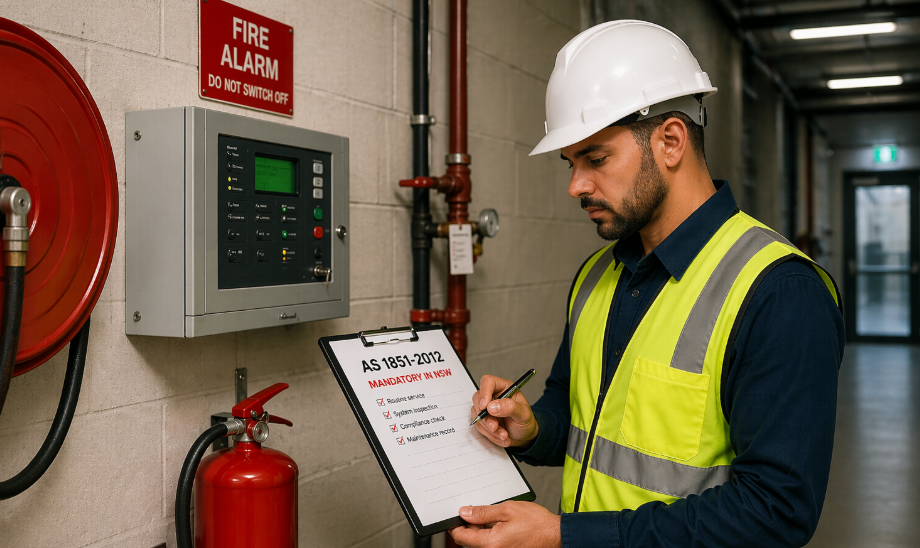
The rules just changed — and many building owners still don't know it
As of 13 February 2026, a major shift in NSW fire safety law is now in force.
If your building is required to submit an Annual Fire Safety Statement (AFSS) or a Supplementary Fire Safety Statement, you are now legally required to maintain all installed essential fire safety measures in accordance with AS 1851-2012 — Routine service of fire protection systems and equipment.
This isn't a suggestion. It's not a recommendation. It is now the mandatory standard of care for buildings with AFSS obligations across New South Wales.
If your current fire safety maintenance program doesn't align with AS 1851-2012, your building is now non-compliant — and exposed to legal, financial and safety risks.
What changed, in plain English
Back in 2022, the NSW Government introduced a set of fire safety reforms. The goal was simple: make buildings safer and lift the industry's poor record of under-compliance with essential fire safety measures.
Those reforms gave the industry a grace period to prepare. That grace period is over.
From 13 February 2026, buildings required to provide an Annual Fire Safety Statement (AFSS) (or a supplementary statement) must:
Maintain all installed essential fire safety measures in line with AS 1851-2012
Have a documented preventative maintenance program in place
Schedule routine servicing — monthly, quarterly, six-monthly, annual, five-yearly — exactly as the standard specifies
Keep full inspection, testing and maintenance records
In short: the way your fire protection systems are serviced is now prescribed by law, not left to the discretion of whichever contractor you happen to use.
Who is affected?
If you own, manage, or occupy any of the following in NSW, this applies to you:
Commercial buildings (offices, warehouses, retail)
Strata-titled residential buildings
Mixed-use developments
Industrial facilities
Aged care and healthcare facilities
Any building with an existing AFSS obligation
If you're not sure whether your building requires an Annual Fire Safety Statement (AFSS), the short answer is that most buildings other than standalone houses (Class 1a) and sheds or garages (Class 10) do. If you're uncertain, you need to find out now.
What is AS 1851-2012, and why does it matter?
AS 1851-2012 is the Australian Standard titled Routine service of fire protection systems and equipment.
Put simply, it is the rulebook for how fire safety equipment is inspected, tested, and maintained — so that it actually works when a fire happens.
It covers things like:
Fire detection and alarm systems
Sprinkler systems
Fire hydrants and hose reels
Portable fire extinguishers
Fire pumps
Emergency and exit lighting
Fire doors and fire shutters
Smoke and heat vents
Passive fire protection
The standard specifies:
What to inspect
How often to inspect it (daily, monthly, six-monthly, annually, five-yearly)
What tests to perform
What records to keep
What to do when something fails
Before these reforms, AS 1851-2012 was considered industry best practice. From February 2026, it is the legal minimum.
Your responsibilities as an owner or manager
Under the new reforms, building owners and their representatives — including property managers, facility managers, and strata committees — are directly responsible for:
Ensuring installed essential fire safety measures are maintained to AS 1851-2012
Having a documented preventative maintenance program in place
Ensuring servicing aligns with the schedules in AS 1851-2012
Keeping accurate records of every inspection, test and maintenance activity
Acting on any defects identified during servicing
This responsibility cannot be delegated away. You can outsource the work to a fire protection company — you cannot outsource the legal obligation
If a fire occurs and investigators find your maintenance regime didn't comply with AS 1851-2012, the legal and insurance consequences fall on you.
What you need to do right now
The deadline has passed. If you haven't acted yet, you need to move quickly.
Step 1 — Get a compliance audit
Have a qualified fire protection provider review every essential fire safety measure listed on your Fire Safety Schedule and compare it against AS 1851-2012 requirements. This tells you exactly where your gaps are.
Step 2 — Get a written maintenance program
Ask your service provider to prepare a formal proposal that:
Lists every installed system and piece of equipment covered under AS 1851-2012
Identifies the required inspection and testing frequency for each
Schedules all servicing for the next 12 months
Clearly separates routine, annual, and five-yearly work
Step 3 — Bring all servicing in line with AS 1851-2012
If your current provider has been servicing equipment less frequently (or less thoroughly) than the standard requires, you now have a compliance gap. Close it.
Step 4 — Update your records
You must be able to prove compliance on paper. Make sure your maintenance records, logbooks and certificates align with AS 1851-2012's record-keeping requirements. No records = no proof of compliance.
Step 5 — Review your Annual Fire Safety Statement (AFSS) before renewal
When your Annual Fire Safety Statement comes up for renewal, your competent fire safety practitioner will assess whether your servicing meets AS 1851-2012. If it doesn't, your AFSS cannot be signed off — which means your building is operating without a valid statement.
What to ask your fire protection service provider
Not all providers are ready for this shift. Before you accept any proposal, ask them:
Does your scope cover every essential fire safety measure on our Fire Safety Schedule?
Does your servicing program match the exact frequencies required by AS 1851-2012?
Will you provide documented evidence of compliance after every service?
What happens when defects are identified — who is responsible for rectification?
Can you support us at AFSS renewal with all the documentation a competent fire safety practitioner will ask for?
If the answer to any of these is vague, unclear, or "we'll work it out later" — that's a red flag.
The cost of getting this wrong
Non-compliance with AS 1851-2012 is no longer a paperwork issue. The consequences can include:
Inability to obtain a valid Annual Fire Safety Statement
Council enforcement action and penalty infringement notices
Significant financial penalties
Insurance claims being reduced or denied in the event of a fire
Personal liability for owners, directors, and strata committee members
In serious cases involving injury or loss of life, criminal exposure
The upside is that compliance is entirely achievable — with the right provider, the right plan, and the right paperwork.
How FireSafe AU can help
At FireSafe, we've built our service model around exactly this: AS 1851-2012 compliance and Annual Fire Safety Statement certification in NSW.
We can:
Audit your current fire safety measures against AS 1851-2012
Build a compliant preventative maintenance program tailored to your building
Service all essential fire safety measures to the exact standards required
Provide full documentation, logbooks, and records
Support your Annual Fire Safety Statement (AFSS) renewal from start to finish
If you're not sure whether your building is compliant, don't wait for a council inspector — or a fire — to find out.
Get in touch today for a no-obligation compliance review.
📞 1300 347 372 🌐 www.annualfiresafetystatements.com.au
Where to find more information
NSW Fair Trading — search "Reforms to fire safety regulation" at fairtrading.nsw.gov.au
Standards Australia Store — store.standards.org.au (search for AS 1851)
FPA Australia — fpaa.com.au (search for AS 1851)
This article is general information and not legal advice. For advice specific to your building or circumstances, contact Fire Safe on 1300 347 372 or consult a qualified fire safety practitioner and your solicitor.