What Is Passive Fire Protection and How It Affects Your Annual Fire Safety Statement in NSW
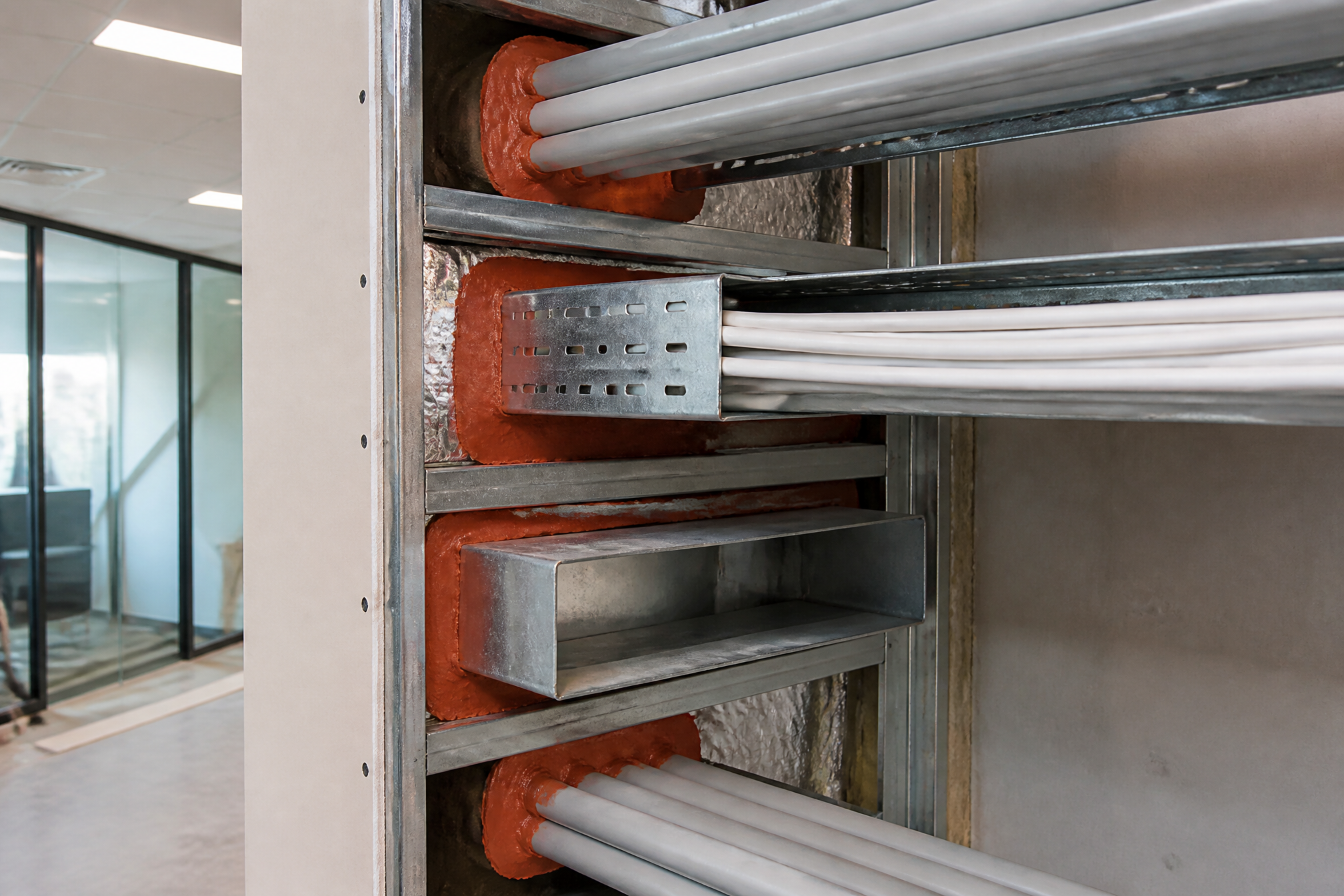
Understanding what is passive fire protection isn't just a technical curiosity for building owners and strata committees across Western Sydney — it's a legal obligation with serious consequences. In my years working with commercial buildings, industrial sheds, and residential complexes across Parramatta, Blacktown, and Penrith, I've seen firsthand how the assumption "our building is up to code" can crumble the moment a passive fire audit is conducted. The reality is straightforward: the walls, floors, doors, and seals that make up your building's passive fire protection system are just as critical to your Annual Fire Safety Statement (AFSS) as any sprinkler or alarm, and getting them wrong can result in significant penalties, prosecution, or worse — a fire that shouldn't have spread. This article breaks down exactly what passive fire protection is, how it's regulated in New South Wales, and how it directly impacts your AFSS compliance.
The Difference Between Passive and Active Fire Protection
Before we get into legislation and compliance, it's worth understanding the fundamental distinction that many building owners overlook. Passive fire protection uses fire-resistant building materials and design to compartmentalise a fire and slow its spread. This includes elements like fire-resistant walls, floors, doors, and structural fire protection like fire-rated cladding, dampers, and fire-stopping through service penetrations. In contrast, active fire protection systems — sprinklers, smoke alarms, EWIS panels — detect and respond to fire in real time.
From my experience, this distinction matters because the two systems serve completely different purposes and are governed by different testing regimes. Active systems interrupt the fire; passive systems buy your building the time it needs for people to evacuate and for emergency services to arrive. Both are essential fire safety measures under the Environmental Planning and Assessment (Development Certification and Fire Safety) Regulation 2021 (EP&A Regulation), and both must appear on your building's Fire Safety Schedule if applicable.
The critical characteristic of passive fire protection is that it is silent, static, and mostly invisible — sealed behind walls, sitting in ceiling cavities, running through service risers. Because it isn't tested every time someone walks past a fire panel or hears a smoke alarm chirp, its condition often deteriorates without anyone noticing. Fires spread more rapidly when passive fire measures fail. It's this invisibility that makes passive fire protection so easy to neglect — and so critical to inspect during your AFSS process.
What Counts as Passive Fire Protection in a NSW Building
Under NSW law, the specific passive fire measures that apply to your building are listed in your Fire Safety Schedule — a document issued by council at the time of construction, renovation, or reclassification, and one that all building owners must have on file. In my professional opinion, if you can't find your Fire Safety Schedule, that's the first phone call I'd make to your local council, because everything downstream in your AFSS process depends on it.
The core passive fire protection measures found in most commercial, industrial, and multi-residential buildings across Western Sydney include the following:
Fire-resistant walls and floors: These form the backbone of a building's fire compartments — the concept of dividing a building into sealed sections that slow fire spread from one area to another.
Fire doors and fire-rated windows: Governed by AS 1905.1 (fire-resistant doorsets) and integral to protecting exit paths and stairwells. Fire doors and fire-rated glazing are essential fire safety measures listed on a Fire Safety Schedule and must be maintained accordingly.
Fire and smoke dampers in HVAC ductwork: Covered by the AS 1682 series, these prevent fire and smoke spread through ventilation systems.
Fire penetration seals: Under AS 4072.1, service penetrations — cables, pipes, ducts passing through fire-rated walls or floors — must be sealed with tested and certified fire-stopping products. In my experience, this is the single most commonly compromised element in older Western Sydney buildings.
Fire-resistant structural protection: Coatings and enclosures applied to structural steel and other load-bearing elements to maintain their structural integrity during a fire.
Insulated fire-rated cladding: External wall systems that resist fire spread across a building's façade — an area of intense regulatory focus since the Grenfell Tower disaster and the subsequent NSW cladding rectification program.
Fire safety practitioners will assess these elements during inspections and testing, and any defects — such as damaged fire doors or improperly installed fire-stopping — must be rectified. The condition of these elements directly determines whether your AFSS can be endorsed.
How Passive Fire Protection Is Regulated Under NSW Law
Passive fire protection in New South Wales sits within a layered regulatory framework, and understanding how these layers interact is essential for building owners and strata committees. In my professional experience, this is where compliance responsibilities get delegated to the wrong parties or misunderstood entirely — with expensive consequences.
At the highest level, the National Construction Code (NCC) sets the performance requirements. In New South Wales, the NCC is enforced primarily by state legislation — the Environmental Planning and Assessment Act 1979 and the EP&A Regulation. Requirements often reference the Building Code of Australia (BCA), which is now part of the NCC and includes specific provisions for passive fire protection. These provisions cover fire compartments, fire-rated construction, fire doors, penetration seals, and structural fire protection.
The BCA sets the performance requirements, meaning it defines what a passive fire protection system must be capable of doing (for example, providing a specific Fire Resistance Level — FRL — of 60/60/60 for a wall). It then references the Deemed-to-Satisfy (DTS) provisions and Australian Standards that specify how those performance outcomes must be achieved. Since 13 February 2026, an amendment to the Environmental Planning and Assessment (Development Certification and Fire Safety) Regulation 2021 has required certain buildings and building work to comply with the routine servicing requirements of Australian Standard AS 1851-2012, which specifies the frequency, scope, and documentation requirements for maintenance of fire safety measures — including passive elements.
The relevant Australian Standards for passive fire protection specifically include:
AS 1530.4 — Fire resistance testing of building elements
AS 1851-2012 — Routine servicing of fire protection systems and equipment
AS 1905.1 — Fire-resistant doorsets
AS 4072.1 — Service penetrations through fire-rated elements
AS 1682 series — Fire and smoke dampers (design, testing, installation, commissioning and maintenance)
For building owners in Cumberland, Canterbury-Bankstown, Fairfield and other Western Sydney LGAs, the practical takeaway is this: the AFSS process is designed to give you an annual, documented, legally defensible snapshot of whether your building's passive fire protection measures satisfy these standards. Without that annual check, you're relying on the assumption that nothing has changed since the last inspection — an assumption that rarely survives contact with reality.
How Passive Fire Protection Directly Affects Your Annual Fire Safety Statement
This is the section every building owner and strata committee needs to understand carefully, because the connection between passive fire condition and AFSS compliance is direct, legally binding, and frequently underestimated. As a building owner in NSW, you are required to submit an Annual Fire Safety Statement (AFSS) to your local council and Fire and Rescue NSW every year. This statement confirms that each essential fire safety measure installed in your building — including passive fire measures listed on your Fire Safety Schedule — has been inspected, tested, and assessed as capable of performing to at least the minimum standard specified in the schedule.
In practical terms, this means an accredited practitioner must physically verify the condition of your fire-rated walls, floors, doors, dampers, seals and structural protection. They cannot sign off on your AFSS if they identify defects — even small ones — that compromise the performance of these elements. If defects are found, they must be rectified before the AFSS can be endorsed. From my professional experience, this is where many strata committees in Blacktown, Penrith and Liverpool are caught out. A one-line item on the Fire Safety Schedule — "fire-rated wall system" — actually represents thousands of square metres of construction with hundreds of potential penetration points. Every service pipe, every cable tray, every plumbing riser is a potential point of failure.
The regulatory reality is uncompromising. The Building Commission NSW have appointed additional passive fire measure investigators to enforce fire safety installation and maintenance obligations. In the current climate of increased enforcement, an incomplete or misleading AFSS carries serious risk. Councils have the authority to issue on-the-spot fines and to prosecute offences, and if you refuse to comply with the fire order there is a further fine of up to $2,500 for each day that the offence continues. Failure to comply with the fire and life safety maintenance requirements can leave building owners liable, and Fire and Rescue NSW conducts routine inspections and issues notices for non-compliance. In some cases these notices lead to orders to vacate — I have seen this happen in Blacktown where a Fire Safety Order forced the temporary closure of a commercial tenancy at significant cost to the owner.
Beyond the direct regulatory penalties, insurance companies increasingly require verified evidence of full compliance with fire safety measures for policy validation — a lapsed AFSS or defective passive fire system can void your building insurance, leaving you exposed to catastrophic financial loss in the event of a fire.
The Most Common Passive Fire Compliance Failures I See in Western Sydney
Over the years, working with property managers and strata committees across the Western Sydney region, I've identified a consistent pattern of passive fire failures. Understanding these common failure modes lets building owners proactively address them before an AFSS inspection turns them into non-compliance events.
The most common issues I encounter are:
Compromised fire-stopping around service penetrations: Every time a trade contractor drills a new hole through a fire-rated wall for cabling, plumbing, or air conditioning, that penetration must be re-sealed to its original FRL using tested and certified fire-stopping products. In practice, the installer punches the hole, runs the service, and no one goes back to seal it. Over years and multiple fit-outs, a wall rated for 90/90/90 fire resistance can be riddled with unsealed openings.
Damaged, painted, or non-compliant fire doors: Fire doors are often the first passive element to fail an audit. In my experience, common issues include broken closers, missing or damaged intumescent seals, painted-over identification tags, and doors that no longer self-latch. In one Parramatta strata building, over 40% of fire doors failed initial inspection due to a decade of decorative repainting that had obscured or damaged the door's tested configuration.
Missing or unmaintained fire dampers: Fire and smoke dampers in HVAC ductwork require routine testing under AS 1851 to ensure they close correctly when triggered. Older buildings often have dampers that have never been serviced — or have been permanently blocked open during ventilation work.
Unauthorised alterations to fire-rated construction: New tenancy fit-outs, particularly in mixed-use developments in Parramatta and Liverpool CBDs, frequently involve modifications to fire-rated walls without proper reinstatement. This can invalidate the entire fire compartmentation strategy of a building.
Missing or outdated fire safety documentation: Documentation is often the first area to fail during an audit. A Fire Safety Schedule that hasn't been updated after major building works, or servicing logbooks that don't align with AS 1851 requirements, will trigger non-compliance findings.
From my professional opinion, most of these failures are entirely preventable with a proactive maintenance schedule and regular passive fire audits — but they compound over time when ignored, until the eventual rectification cost is orders of magnitude greater than what proactive maintenance would have cost.
Passive Fire Compliance Requirements at a Glance
The table below summarises the core passive fire protection elements that appear on most NSW Fire Safety Schedules, the standards that govern them, and the compliance implications for your AFSS. Building owners and strata committees should use this as a starting point for understanding what will be assessed during the AFSS inspection process.
| Passive Fire Element | Governing Australian Standard | Typical Fire Safety Schedule Requirement | AFSS Inspection Focus |
|---|---|---|---|
| Fire-rated walls and floors | AS 1530.4, BCA Part C | FRL (Fire Resistance Level) as specified in Fire Safety Schedule | Structural integrity, penetration sealing, no unauthorised alterations |
| Fire doors | AS 1905.1, AS 1851-2012 | Fire door assemblies maintained to as-installed specification | Seals, latching mechanisms, self-closing operation, ID tags, gap tolerances |
| Fire-rated glazing | AS 1530.4 | Glazing installed to tested specifications | Frame integrity, seal condition, no impact damage |
| Fire and smoke dampers | AS 1682 series, AS 1851-2012 | Servicing to AS 1851, minimum 20% inspected per year | Correct operation, fusible link condition, accessible service ports |
| Fire penetration seals | AS 4072.1 | Sealed to match FRL of the wall/floor being penetrated | Presence of certified fire-stopping, no unsealed penetrations |
| Structural fire protection | AS 1530.4, BCA Part C | Coatings/enclosures maintained to as-installed specification | Coating integrity, damage inspection, structural condition |
| Fire-rated cladding | NCC 2019 Amendment 1 (post-cladding audit) | Compliance with combustibility requirements | Cladding material verification, façade integrity |
What This Means for Building Owners and Strata Committees Right Now
If you own or manage a building in Parramatta, Blacktown, Penrith, Liverpool, Canterbury-Bankstown, Cumberland or Fairfield, and passive fire protection isn't part of an active, documented, annual inspection program, you are almost certainly at risk. The AS 1851-2012 mandate now applies, the Building Commission NSW is actively appointing additional inspectors, and enforcement action is escalating.
In my professional opinion, the highest-value action a building owner can take is to commission a Passive Fire Mapping Audit — a physical inspection of every fire-rated wall, floor, door, damper, and penetration in the building against the current Fire Safety Schedule. This audit gives you a documented baseline of your building's current passive fire status, identifies any defects or non-conformances, and produces a prioritised rectification plan. From that baseline, ongoing maintenance and AFSS assessment becomes straightforward. Without it, every year's AFSS is essentially a bet that nothing has changed since the last one.
I've overseen these audits across Western Sydney and can say confidently: I've never conducted one where zero non-conformances were found. In older buildings, the defect count can run into the hundreds. Better to find those defects on your own terms — with time to plan the rectification — than under a Fire Safety Order with 30 days to comply.
Frequently Asked Questions
Is passive fire protection included in my Annual Fire Safety Statement?
Yes. Passive fire measures — fire doors, fire-rated walls, floors, penetration seals, dampers, structural fire protection — are essential fire safety measures under the Environmental Planning and Assessment Regulation 2021 whenever they are listed on your building's Fire Safety Schedule. The AFSS is a legal declaration that each of those measures has been inspected, tested, and found to be operating to at least the minimum standard specified in the schedule. If any passive element fails inspection, it must be rectified before your AFSS can be endorsed. Failing to submit a compliant AFSS on time exposes the building owner to substantial penalties under NSW law.
Who is qualified to inspect passive fire protection in NSW?
Under NSW regulations, inspection and certification of essential fire safety measures — including passive fire elements — must be carried out by an Accredited Practitioner (Fire Safety), commonly known as an APFS. This accreditation is administered by Fire Protection Association Australia under the Fire Protection Accreditation Scheme (FPAS) and is recognised by NSW Government agencies. Practitioners performing passive fire inspection must hold specialty accreditation in the relevant categories and typically hold formal fire protection industry qualifications. Engaging an unqualified person to certify your AFSS does not satisfy your legal obligations, and any AFSS signed by a non-accredited person is not legally valid.
What happens if defects are found during a passive fire audit?
Any defects identified during a passive fire audit must be rectified before the AFSS can be endorsed. In practice, this means engaging qualified fire protection contractors — for fire-stopping, fire door rectification, or damper servicing — and having the completed work inspected and documented. The cost of rectification varies dramatically depending on the scope and severity of defects. From my experience, a proactive Passive Fire Mapping Audit conducted well before the AFSS due date gives building owners the time and budget flexibility to plan rectification works properly. A defect discovered during a late-stage AFSS inspection typically results in rushed, expensive works and potential AFSS lodgement delays that trigger council penalties.
How does the mandatory AS 1851-2012 requirement from February 2026 affect passive fire compliance?
The February 2026 amendment to the EP&A Regulation 2021 makes AS 1851-2012 the mandatory maintenance standard for essential fire safety measures in most NSW buildings. For passive fire protection, this means routine servicing, inspection, testing frequencies, and documentation requirements set out in AS 1851-2012 are now legally enforceable — not merely recommended. Practically, this reinforces what many building owners in Western Sydney have already been doing informally: regular passive fire audits, documented servicing logs, and defect rectification programs. If your building's current maintenance regime doesn't align with AS 1851-2012, your AFSS may be at risk. The Building Commission NSW have appointed additional passive fire measure investigators to enforce fire safety installation and maintenance obligations, which signals increased regulatory scrutiny going forward.
Disclaimer: This article is intended for general informational purposes only. It does not constitute legal advice. Building owners, strata committees, and property managers should seek independent professional advice regarding their specific compliance obligations under the Environmental Planning and Assessment Regulation 2021, AS 1851-2012, the National Construction Code, and any applicable Australian Standards. Requirements will vary depending on building class, the specifics of the Fire Safety Schedule, and the age and condition of installed passive fire measures.
Book Your Passive Fire Audit and Annual Fire Safety Statement Inspection with Fire Safe Today
If you're a building owner, strata committee member, or facility manager anywhere across Western Sydney — including Parramatta, Blacktown, Penrith, Liverpool, Canterbury-Bankstown, Cumberland, and Fairfield — and you haven't had a comprehensive passive fire inspection in the past twelve months, now is the time to act. With AS 1851-2012 now mandatory in NSW and the Building Commission actively investigating passive fire compliance, the risk of doing nothing has never been higher.
Fire Safe is Western Sydney's specialist fire safety compliance provider, and our Accredited Practitioners (Fire Safety) deliver the full spectrum of passive fire services: comprehensive Passive Fire Mapping Audits, fire door inspection and rectification, damper testing and servicing to AS 1851, penetration seal audits, and complete Annual Fire Safety Statement inspection and certification. We understand the specific challenges of Western Sydney's building stock — from older strata blocks in Fairfield and Cumberland to industrial facilities in Wetherill Park and modern commercial developments in Parramatta CBD. Call Fire Safe today on 1300 347 372 or complete the contact form on this page to book your Annual Fire Safety Statement inspection or passive fire audit. Don't wait for a Fire Safety Order or a failed AFSS to force the issue — get ahead of it now and protect your building, your occupants, and your investment.