AS 1905.1 Fire Door Inspection Requirements: The Complete NSW Compliance Guide for Building Owners and Strata Committees
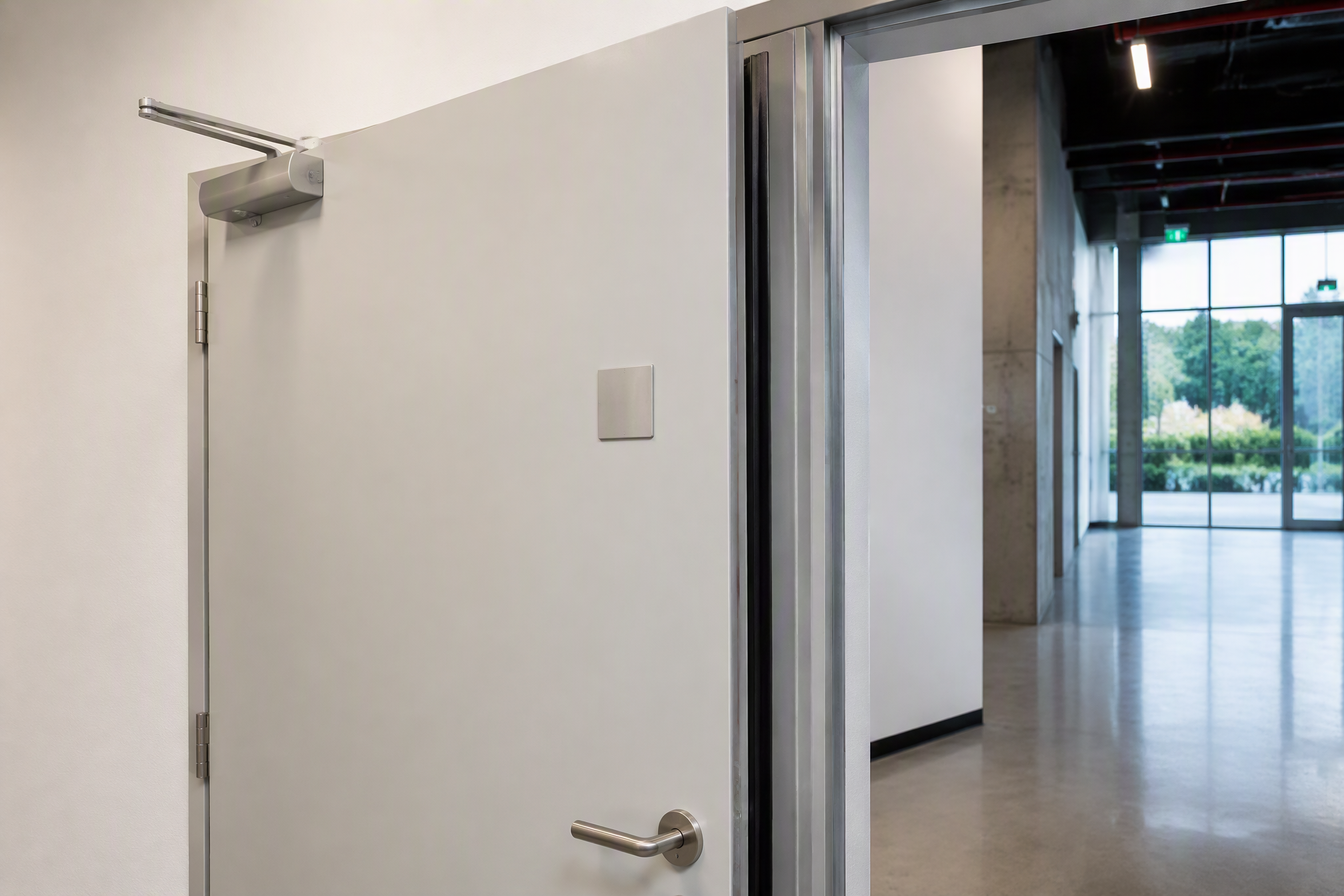
Fire doors are one of the most overlooked yet legally consequential elements of building compliance in New South Wales. Ten years of working across Western Sydney's commercial and residential landscape has taught me one recurring truth — building owners routinely underestimate what a compliant fire door actually looks like, and what happens when one fails inspection. This isn't just a technical box-ticking exercise. Fire doors are essential fire safety measures under NSW law, and their condition directly determines whether your Annual Fire Safety Statement (AFSS) can be legally lodged. This guide breaks down AS 1905.1 fire door inspection requirements in plain English, explains how they connect to your AFSS obligations, and shows you exactly what auditors are looking for.
Why Fire Doors Matter More Than Most Building Owners Realise
I've walked through hundreds of buildings across Parramatta, Blacktown, and Liverpool where the fire doors looked perfectly acceptable at a glance — until you actually inspected them. Fire doors have specific tolerances for gap sizes around the perimeter and to the floor, they need functional latching mechanisms and self-closing devices, and every single component must work together to give the door its rated fire resistance level (FRL).
Fire doors are designed to contain the spread of fire and smoke, aiding safe evacuation and giving fire services time to respond. When they fail — because a self-closer has been disabled to make daily use easier, or because a gap has widened over years of settling — they can no longer perform their fundamental purpose. In my professional opinion, this is why NSW regulators have tightened enforcement so significantly. Fire doors that were signed off decades ago rarely remain compliant without active maintenance, and the consequences of a failed fire door in a genuine emergency can be catastrophic.
The Environmental Planning and Assessment (Development Certification and Fire Safety) Regulation 2021 requires that any building with essential fire safety measures — including fire doors — must have those measures maintained and inspected annually, with the results certified through a lodged AFSS. If your fire doors fail inspection, the AFSS cannot be issued. And if the AFSS cannot be issued, your building is legally non-compliant.
What Is AS 1905.1 and Why It Governs Every Fire Door in Your Building
AS 1905.1-2015 is the Australian Standard that specifies the design, construction, performance requirements, and installation of fire-resistant doorsets used to protect openings in fire-rated walls in Australian buildings. It is the foundational document referenced by the National Construction Code (NCC) for fire door compliance, and it defines everything from the materials that can be used in a fire doorset assembly to the fire resistance levels doors must achieve for different applications.
From my experience, one of the most common misunderstandings I encounter with strata committees and property managers in Cumberland and Canterbury-Bankstown is the assumption that any fire door labelled "fire door" is compliant. It isn't. Under AS 1905.1, a compliant fire doorset is a complete, tested assembly — the door leaf, frame, latching hardware, self-closing device, seals, and hinges must all work together as certified. Replacing a hinge, changing a lock cylinder, or removing an intumescent seal can invalidate the entire doorset's fire rating. This is why fire doors are treated differently from other doors in commercial and residential buildings — they aren't just doors, they're tested assemblies.
AS 1905.1 also specifies the identification requirements for fire doors, including the maintenance record tag that must be visible on every compliant door in NSW. The tag records the details of each inspection, the person who inspected it, and any defects identified. During a Fire Safety Statement inspection, missing or illegible tags are one of the most frequently cited compliance failures — I have seen entire buildings fail their annual inspection because the maintenance history could not be verified.
The Difference Between AS 1905.1 and AS 1851-2012 for Fire Doors
This is where I see even experienced facility managers get confused, and it's worth taking a moment to clarify because it directly affects who can legally inspect your fire doors and what you need to be paying for.
AS 1905.1-2015 governs the design, construction, and installation of fire-resistant doorsets. It specifies what a fire door must be capable of doing, how it must be constructed, and how it must be installed in the wall opening. If you are installing a new fire door or replacing an existing one, AS 1905.1 is the standard the work must comply with.
AS 1851-2012 governs the routine servicing of fire protection systems and equipment — including fire doors — in existing buildings. Section 17 of AS 1851-2012 specifies exactly what an inspector must check on a fire door during routine maintenance, at what frequency, and what documentation must be produced. This is the standard your annual AFSS inspection will reference.
The two standards work together. AS 1905.1 defines what a compliant fire door looks like. AS 1851-2012 defines how you keep it compliant over its service life. For building owners and strata committees, this distinction matters because the mandatory application of AS 1851-2012 from 13 February 2026 means every fire door in every NSW building subject to an AFSS must be inspected and maintained to a documented AS 1851-2012 servicing program — not just checked when someone thinks it might need attention.
What Auditors Actually Look For During an AS 1905.1 Fire Door Inspection
In my professional experience, most fire door failures come down to a small number of recurring issues. Understanding what your inspector will be checking for gives you the opportunity to identify and rectify problems before they cost you your AFSS certification.
The typical inspection sequence for each fire door in your building includes the following elements:
The maintenance tag: Every compliant fire door must have a visible, legible AS 1905.1 identification and maintenance tag. Missing or damaged tags are grounds for non-compliance regardless of the door's actual condition.
The door leaf: Inspectors check for structural damage, unauthorised modifications, added ventilation grilles, and impact damage. Any hole drilled into a fire door — even for a peephole or a lock upgrade — can invalidate the door's fire rating unless the modification has been tested and certified.
Gap tolerances: Fire doors must maintain specific clearances at the head, sides, and threshold. The maximum permissible gap at the head and sides is typically 3mm, and the gap under the door leaf must fall within tested tolerances (usually less than 10mm to a non-combustible floor). Doors that have shifted with building settlement often fail on gap measurements alone.
Intumescent seals: These are the strips fitted around the perimeter of the door that expand when heated to seal the gap between the door and frame. Missing, damaged, painted over, or dislodged intumescent seals are one of the most common failure points I encounter in Western Sydney buildings.
Self-closing devices: Fire doors must close automatically and fully latch after being opened. Doors that stop short of latching, or that have their closers adjusted incorrectly, fail inspection. Doors that have been wedged open — a habit I see constantly in commercial premises — also fail.
Latching hardware: The latch and strike must engage correctly every time the door closes. Worn latches, misaligned strikes, and non-compliant handle assemblies are common defect areas.
Hinges and frame: Hinges must be intact, correctly fitted, and not modified. Frames must be secure to the wall structure and free from damage.
Frame-to-wall gap: The gap between the door frame and the fire-rated wall must be properly fire-stopped with an approved sealant or packing material.
Fire door signage: Where required by the Fire Safety Schedule, fire doors must display appropriate warning signage.
Any single element failing this checklist can be enough for the inspector to record a defect, and multiple defects on a single door will typically result in it being marked as non-compliant.
Fire Door Inspection Compliance Requirements at a Glance
The following table summarises the key AS 1905.1 and AS 1851-2012 requirements that apply to fire doors in NSW buildings subject to an Annual Fire Safety Statement. This is a starting reference for building owners and strata committees — actual requirements will vary based on the specific building class and the details of the Fire Safety Schedule.
| Requirement | What It Means | Governing Standard | Consequence of Non-Compliance |
|---|---|---|---|
| Annual fire door inspection | Every fire door in the building must be inspected annually by a qualified person | AS 1851-2012, Section 17 | AFSS cannot be endorsed until rectified |
| Maintenance tagging | Every fire door must display a visible, legible identification and inspection tag | AS 1905.1-2015 | Non-compliance recorded during audit; AFSS delay |
| Gap tolerances | Perimeter gaps within tested tolerances (typically 3mm head/sides; under-door within specification) | AS 1905.1-2015 | Fire door fails inspection; requires realignment or replacement |
| Intumescent seals | Continuous, undamaged seals around door perimeter, functional and untampered | AS 1905.1-2015 | Fire door fails to seal against smoke and heat; non-compliance |
| Self-closing operation | Door must fully close and latch under normal spring/closer tension | AS 1905.1-2015; AS 1851-2012 | AFSS refusal; potential council fine |
| Latching hardware | Latch engages fully, hardware not modified from tested configuration | AS 1905.1-2015 | Fire door does not perform as tested; non-compliance |
| Frame-to-wall integrity | Gap between frame and wall sealed with approved fire-stopping material | AS 1905.1-2015; AS 4072.1 | Fire compartmentation compromised; non-compliance |
| Documentation retention | Complete inspection and rectification records maintained on site | AS 1851-2012 | Audit failure; possible penalty under EP&A Regulation |
| Rectification of defects | All identified defects rectified before AFSS certification | EP&A Regulation 2021 | AFSS legally invalid until defects addressed |
| APFS-accredited inspector | Inspections carried out by an Accredited Practitioner (Fire Safety) with fire door competency | NSW Government FPAS framework | AFSS legally invalid if signed by non-accredited person |
The Common Fire Door Compliance Failures I See in Western Sydney
After a decade of inspecting buildings across Blacktown, Penrith, Fairfield, and beyond, certain fire door failures appear in nearly every audit report. Understanding these recurring issues gives building owners a proactive advantage — you can walk your building once a quarter and correct many of these before an official inspection turns them into non-compliance events.
Wedges, hooks, and magnetic hold-open devices used incorrectly. Fire doors are frequently propped open for convenience — kitchen doors in strata common areas, service doors in commercial premises, riser doors in industrial buildings. Only proper certified hold-open devices connected to the building's fire alarm system are compliant. Standard door wedges are not.
Painted-over intumescent seals. During regular maintenance painting, contractors often paint straight over intumescent strips. This can compromise the seal's ability to expand and function during a fire. Any paint on the intumescent material typically requires the seal to be replaced.
Modified locks and door hardware. Building owners frequently swap out lock cylinders or handles for convenience, aesthetics, or accessibility. If the replacement hardware is not part of the tested doorset assembly, the door's fire rating is invalidated.
Damaged or missing maintenance tags. Over years of paint, cleaning, and general wear, the AS 1905.1 tag on many fire doors becomes illegible or falls off entirely. Without a legible tag, the door's inspection history cannot be verified and it will be marked non-compliant.
Impact damage to door leaves. Trolleys, forklifts in warehouses, and general foot traffic wear down fire doors over time. Cracks, dents, gouges, and holes — even small ones — can compromise the door's tested performance.
Incorrect self-closer tension. Self-closing devices lose spring tension over time, or are deliberately loosened to stop doors slamming. A door that reaches its frame but doesn't fully latch is not compliant.
Unauthorised modifications after installation. Adding a peephole, drilling for a signage bracket, cutting for a mail slot, or fitting an intercom will invalidate a fire door unless the modification is specifically tested and certified.
Most of these issues are easily rectified when caught early. The real problems arise when they accumulate over multiple years without inspection or maintenance — at which point the rectification cost can be substantial. From my experience, buildings that maintain an annual proactive fire door service schedule almost never face significant AFSS lodgement delays. Buildings that rely on reactive maintenance almost always do.
How Fire Door Inspection Failures Directly Affect Your AFSS
This is where the technical requirements translate into direct legal consequences for building owners. Under NSW law, every essential fire safety measure listed on your Fire Safety Schedule must be inspected and certified as capable of performing to its required standard before your AFSS can be lodged. Fire doors are almost universally listed on Fire Safety Schedules for Class 2 to Class 9 buildings — which covers the vast majority of commercial, industrial, retail, and strata residential buildings in Western Sydney.
If any fire door in your building fails inspection, the AFSS cannot be certified. The building is then in breach of the EP&A Regulation 2021, and the owner is exposed to significant regulatory action — including on-the-spot fines, formal Fire Safety Orders from council, and prosecution for serious or repeated non-compliance. In practice, I've seen a small commercial building in Blacktown receive a Fire Safety Order requiring rectification of 14 defective fire doors within 30 days. The rectification cost — including replacement doors, new hardware, and fire-stopping around frames — was substantial. That kind of financial exposure is entirely avoidable with an active maintenance program.
Insurance carries a further consequence. Insurance companies increasingly require verified evidence of full compliance with fire safety measures for policy validation. A lapsed AFSS or an inspection report showing significant fire door defects can lead to reduced coverage, higher premiums, or complete denial of a claim following a fire event. From my professional opinion, this is the exposure that most alarms strata committees when they understand it fully — a fire in a building with defective fire doors may leave the owners corporation carrying uninsured losses that dwarf the cost of proactive maintenance a hundred times over.
The Five-Step Fire Door Compliance Blueprint for Western Sydney Building Owners
For building owners, strata committees, and property managers looking to bring their fire door compliance under control, here is the practical roadmap I recommend based on years of field experience:
Locate and confirm your Fire Safety Schedule. This is the foundational document that identifies exactly which fire doors are essential fire safety measures in your building. If you don't have it, your first action is to obtain a copy from your local council or from the current AFSS on file.
Commission a full fire door inspection audit. Engage an APFS-accredited fire safety practitioner with fire door competency to conduct a physical inspection of every fire door listed on the Schedule against AS 1905.1 and AS 1851-2012 requirements. This produces a documented baseline of your current compliance status.
Prioritise and rectify identified defects. Working from the audit report, address defects in order of severity — starting with any doors that have failed complete self-closing or latching. Ensure all rectification work is carried out by qualified fire door specialists and properly documented.
Establish an ongoing maintenance program. Set up an annual fire door inspection schedule aligned with your AFSS due date. Where possible, incorporate quarterly walk-through checks by building maintenance staff to catch obvious defects — wedged-open doors, painted-over seals, impact damage — between formal inspections.
Maintain compliant documentation. Ensure every inspection, rectification, and modification is recorded in the building's fire safety logbook, with copies retained for the minimum required period. This documentation is what actually supports your AFSS certification each year and provides your legal defence in the event of an audit or incident.
Frequently Asked Questions
Do all fire doors in my NSW building need to be inspected annually?
Yes, generally. Under AS 1851-2012 (mandatory in NSW from 13 February 2026 for buildings subject to an AFSS), fire doors listed as essential fire safety measures on a building's Fire Safety Schedule require inspection at least annually as part of the routine servicing requirements. The specific inspection scope is set out in Section 17 of AS 1851-2012, and every inspection must be documented and available for AFSS certification. Some measures may require additional monitoring, but the primary formal inspection interval is annual.
Can I inspect and maintain fire doors myself, or does it need to be a qualified professional?
For the purposes of your Annual Fire Safety Statement, fire door inspection and certification must be carried out by an Accredited Practitioner (Fire Safety) — an APFS — with the relevant competency for fire doors. Building owners and maintenance staff can conduct informal visual checks and identify obvious defects between formal inspections, but only an APFS-accredited practitioner can legally certify your fire doors for AFSS purposes. This accreditation is administered by Fire Protection Association Australia through the Fire Protection Accreditation Scheme (FPAS), which is recognised by NSW Government authorities. Engaging an unqualified person to inspect or certify your fire doors does not satisfy your legal obligations.
What happens if my fire doors fail inspection?
If defects are identified during a fire door inspection, they must be rectified before the AFSS can be certified. This typically means engaging a qualified fire door specialist to repair or replace the affected components, having the rectified doors re-inspected, and updating the maintenance documentation. In some cases — particularly where multiple doors have failed — the rectification program may take several weeks to complete. For this reason, I strongly recommend building owners commission their annual fire door inspection at least 60 days before the AFSS is due, giving adequate time to address any defects without triggering a lodgement delay and the accumulating penalties that can follow.
How does the mandatory AS 1851-2012 requirement affect fire door compliance in 2026?
Since 13 February 2026, an amendment to the EP&A Regulation 2021 has required most NSW buildings to comply with the routine servicing requirements of AS 1851-2012. For fire doors, this means the inspection frequencies, methodologies, and documentation requirements specified in Section 17 are now legally enforceable — not just best practice. Practically, this means building owners who have been relying on informal or reactive fire door maintenance need to transition to a documented AS 1851-2012 servicing program. Your fire safety practitioner should be able to confirm that their inspection methodology aligns with AS 1851-2012 requirements, and your servicing records should be kept in the format that AS 1851 specifies.
Disclaimer: This article is intended for general informational purposes only. It does not constitute legal advice. Building owners, strata committees, and property managers should seek independent professional advice regarding their specific compliance obligations under the Environmental Planning and Assessment Regulation 2021, AS 1905.1-2015, AS 1851-2012, and any other applicable Australian Standards. Requirements may vary depending on building class, the specifics of the Fire Safety Schedule, and the age and condition of installed fire doors.
Book Your Fire Door Inspection and Annual Fire Safety Statement with Fire Safe Today
If you own or manage a commercial building, strata complex, or industrial facility anywhere across Western Sydney — including Parramatta, Blacktown, Penrith, Liverpool, Canterbury-Bankstown, Cumberland, and Fairfield — the mandatory AS 1851-2012 compliance regime and the annual AFSS obligation mean fire door inspection is not something you can afford to leave to chance. With council enforcement increasing and insurance scrutiny tightening, the risk of doing nothing has never been higher.
Fire Safe is Western Sydney's specialist fire safety compliance provider, and our Accredited Practitioners (Fire Safety) deliver the full range of fire door services: comprehensive AS 1905.1 inspection and defect reporting, coordination of specialist fire door rectification works, ongoing AS 1851-2012 maintenance programs, and complete Annual Fire Safety Statement inspection and lodgement. We understand the specific building stock across every Western Sydney LGA — from ageing walk-up strata blocks in Fairfield to modern mixed-use developments in Parramatta CBD — and we tailor our fire door compliance programs to the specific needs of each building. Call Fire Safe today on 1300 347 372 or complete the contact form on this page to book your Annual Fire Safety Statement inspection or fire door compliance review. Get ahead of your compliance obligations rather than reacting to them — protect your building, your occupants, and your legal position with a Western Sydney team that understands what's at stake.