How to Use a Fire Extinguisher Correctly: The PASS Method Step by Step
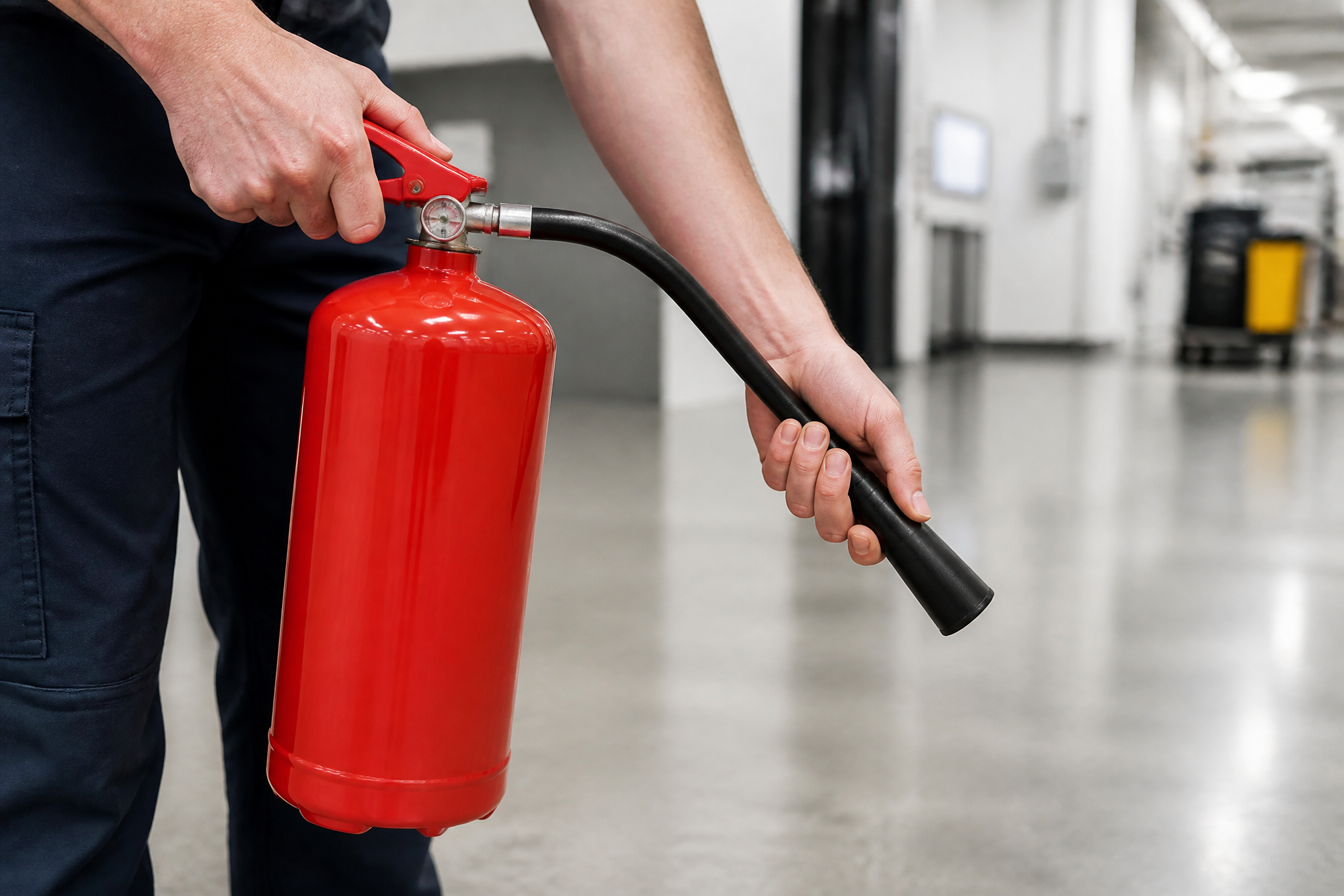
Knowing how to use a fire extinguisher correctly using the PASS method step by step is not simply a useful life skill — for building owners, strata committees, and facility managers in Western Sydney, it is a cornerstone of your legal fire safety obligations under NSW legislation. In over ten years of conducting fire safety inspections and Annual Fire Safety Statement assessments across Parramatta, Blacktown, Penrith, Liverpool, and surrounds, I have walked into far too many buildings where the extinguishers were correctly mounted, correctly tagged — and yet nobody in the building truly knew how to operate one under pressure. That gap between compliance on paper and competence in practice is exactly where lives are put at risk. This article closes that gap.
Why the PASS Method Matters More Than You Think
The PASS method — Pull, Aim, Squeeze, Sweep — is the universally recognised technique for operating a portable fire extinguisher, endorsed by fire safety experts worldwide as a proven, four-step technique. The acronym PASS is used to describe these four basic steps. Fire and Rescue NSW publishes the PASS framework on its own website as the standard approach for safe extinguisher operation, which should tell you everything about how seriously the regulator takes it.
From my experience, the buildings that suffer the worst first-attack outcomes are not the ones without extinguishers — they are the ones where occupants froze because nobody had ever walked them through the steps. Fire incidents escalate quickly. Early intervention with the correct fire extinguisher can limit damage, reduce downtime and support occupant safety. However, misuse can increase risk, cause injury or delay evacuation.
For NSW building owners, this matters at a legal level too. An Annual Fire Safety Statement (AFSS) is a mandatory legal declaration required under the Environmental Planning and Assessment (Development Certification and Fire Safety) Regulation 2021 for most commercial, industrial, and multi-residential buildings across New South Wales. Portable fire extinguishers listed on your Fire Safety Schedule are an Essential Fire Safety Measure — meaning they must not only exist and be maintained, but they must be capable of being used effectively by your building's occupants.
Step-by-Step: The PASS Method Explained
Let me walk you through each step exactly as I would during a warden training session for a strata building in Blacktown or a commercial tenancy in Parramatta.
P — Pull the Pin. Pull the pin at the top of the extinguisher, breaking the seal. When in place, the pin keeps the handle from being pressed and accidentally operating the extinguisher. Immediately test the extinguisher by giving a brief burst aimed away from yourself and bystanders. This confirms the unit is pressurised and working before you approach the fire. I have seen occupants march straight toward a fire with a flat extinguisher — this quick test costs you one second and could save everything.
A — Aim Low. Approach the fire standing at a safe distance. Aim the nozzle or outlet towards the base of the fire. Direct the extinguisher at the base of the fire rather than the flames themselves. By targeting the base, you cut off the fire's source of fuel, which is essential for effective suppression. In professional opinion, aiming at the visible flames is the single most common error I witness during training drills.
S — Squeeze the Handle. Squeeze the handles together to discharge the extinguishing agent inside. To stop discharge, release the handles. Keep your stance stable, your feet shoulder-width apart, and maintain a firm two-handed grip. Western Sydney summers are hot and dry — if there is any wind blowing through an open loading dock or warehouse, position yourself upwind before you squeeze.
S — Sweep Side to Side. Sweep the nozzle of the fire extinguisher from side to side maintaining your aim at the base of the fire. Sweep the nozzle from side to side at the base of the fire until it appears to be out. Continue to watch the area for re-ignition and be prepared to reapply if necessary. Never assume the fire is out after one pass. Step back, watch for at least thirty seconds, and keep the extinguisher in hand.
Safe Distance. Position yourself 2–3 metres back before starting. Stand 2–3 metres from the fire, holding the extinguisher upright with the nozzle pointed away. Closer than this and you risk injury from radiant heat; too far and the agent loses effectiveness.
Know Your Fire Class Before You Pull the Pin
The PASS method is technique — but technique applied with the wrong extinguisher type can make a fire dramatically worse. This is a point I cannot stress enough in my professional work across Western Sydney. The type of fire extinguisher you need depends on the type of fire you need to extinguish. This is very important, as using the wrong extinguisher can have disastrous consequences.
There are six classes of fire: Class A (combustible materials such as wood, paper, and fabric), Class B (flammable liquids such as petrol, turpentine or paint), Class C (flammable gases like LPG, hydrogen, butane or methane), Class D (combustible metals), Class E (electrical equipment), and Class F (cooking oils and fats).
The danger of misidentification is real and immediate. Grab the wrong type in an emergency, and you can make a bad situation considerably worse. Use a water extinguisher on a flaming deep fryer, for instance, and you'll cause a violent oil eruption rather than stop a fire. I attended an incident assessment at a Canterbury-Bankstown restaurant some years back where exactly this mistake was made — a water unit was grabbed in panic for a Class F cooking oil fire. The damage to the kitchen was catastrophic and entirely avoidable.
Similarly, the danger with electrical fires is twofold: the electrical current itself can be a hazard, and if the wrong extinguishing agent is used, it can conduct the electricity to the user, leading to electrocution. Only Class E fire extinguishers should be used on an electrical fire. In my professional opinion, every building owner in Western Sydney should verify right now that the correct extinguisher types are installed for the specific risk classes present in their premises — not just that extinguishers are present.
The table below summarises the six Australian fire classes and the corresponding extinguisher types that are appropriate for each, as guided by AS 2444:2001 — Portable Fire Extinguishers and Fire Blankets: Selection and Location:
| Fire Class | Fuel Type | Suitable Extinguisher Type(s) | Common Building Context (Western Sydney) |
|---|---|---|---|
| Class A | Ordinary combustibles — wood, paper, textiles, plastics | Water, Foam, ABE Dry Powder | Offices, strata common areas, warehouses |
| Class B | Flammable liquids — petrol, oil, solvents, paint | Foam, ABE Dry Powder, CO₂ | Carparks, workshops, industrial units (Penrith, Blacktown) |
| Class C | Flammable gases — LPG, natural gas, acetylene | ABE Dry Powder | Commercial kitchens, plant rooms with gas supply |
| Class D | Combustible metals — magnesium, aluminium powder | Specialist dry powder (Class D specific) | Specialist manufacturing only — not general commercial |
| Class E | Energised electrical equipment — switchboards, motors | CO₂, ABE Dry Powder (non-conductive agents only) | Server rooms, electrical risers, office fit-outs |
| Class F | Cooking oils and fats | Wet Chemical | Commercial kitchens, food courts (Parramatta, Liverpool) |
The Most Common Mistakes I See on Site and How to Avoid Them
After a decade of compliance work across Western Sydney, I have seen the same errors repeated across strata complexes, commercial buildings, and industrial premises. Here are the most critical ones your team must avoid:
Aiming at the flames, not the base. This is the number one technique error. You are not trying to cool the fire — you are trying to remove its fuel source. Always aim low.
Standing too close. Stepping within one metre of a fire to use an extinguisher puts the operator at serious risk of flash injury. Maintain the 2–3 metre safe distance.
Not testing before approaching. Immediately test the extinguisher before approaching the fire to ensure it is working correctly. A flat or faulty unit is a deadly surprise mid-approach.
Using the wrong agent class. As discussed above — verify the extinguisher type before every fire emergency drill, not during one. Your Fire Safety Schedule tells you which types should be present in each zone.
Turning your back on a "dead" fire. Re-ignition is real, particularly with Class B liquids and Class A deep-seated fires. Stay back, watch, and keep the extinguisher in hand.
Blocking egress routes. Never position yourself between the fire and your only exit. Always keep your escape route clear before you engage — if it is blocked, evacuate immediately and do not attempt first attack.
Using an extinguisher that is out of service date. Extinguishers must be regularly inspected, pressure-checked and tagged in accordance with Australian Standard AS 1851. Poor maintenance can result in pressure loss, blocked hoses or failed discharge. An extinguisher that has not been serviced is not a fire safety measure — it is false confidence.
Your Legal Obligations: AS 1851, AS 2444, and the NSW Compliance Framework
For building owners and strata committees in NSW, understanding the regulatory framework around fire extinguishers is non-negotiable. Three interlocking Australian Standards govern your obligations, and a failure in any one of them constitutes a compliance failure across the entire system.
These standards form a "Fire Safety Trinity": AS 2444 (Selection and Location), AS 1851 (Routine Service and Maintenance), and AS 1841 (general requirements for portable fire extinguishers). Together, these three standards govern the entire lifecycle of a fire extinguisher, from its certification, through its correct placement in a facility, to its ongoing operational readiness.
Practically speaking, AS 2444 is concerned primarily with the initial selection, placement, and accessibility of portable fire extinguishers and fire blankets, and is crucial in the design phase of a building's fire safety strategy. AS 1851 outlines the requirements for the ongoing maintenance and servicing of existing fire protection systems and equipment, emphasising the necessity of implementing structured maintenance regimes to ensure all fire protection equipment operates effectively at all times.
Critically, from 13 February 2026, AS 1851-2012 became the prescribed maintenance standard for essential fire safety measures under the NSW Environmental Planning and Assessment (Development Certification and Fire Safety) Regulation 2021. This is not a minor administrative update — it means that if your extinguishers are not being maintained to AS 1851-2012, your Annual Fire Safety Statement is at risk.
The maintenance schedule under AS 1851 operates at multiple intervals. The schedule includes a six-monthly semi-annual inspection where a technician must visit every extinguisher, check the pressure gauge, check the physical condition, and punch the service tag. An annual inspection involves a more detailed check of the unit. Every five years, extinguishers must be pressure tested — or, more commonly, simply swapped out for a new or refurbished unit, as it is often cheaper.
A building may have its extinguishers perfectly installed according to AS 2444, but it becomes non-compliant the moment the first six-monthly service required by AS 1851 is missed. I have seen strata committees in Fairfield and Cumberland face exactly this situation — technically compliant installation records, but a lapsed service regime that invalidated their AFSS. The cost to rectify was significant.
When NOT to Use a Fire Extinguisher and When to Evacuate
This is a section many fire safety guides skip, and in my professional opinion, it may be the most important of all. The PASS method is a first-attack tool designed for small, incipient-stage fires only. It is not a firefighting technique. There are clear situations where attempting to use an extinguisher is the wrong decision — and where your obligation is to evacuate and call 000.
Do not attempt to use a fire extinguisher if any of the following apply:
The fire is larger than a standard office wastepaper basket, if it has spread beyond its point of origin, first attack is no longer appropriate.
The room is filling with smoke, smoke inhalation kills faster than flame. If visibility is compromised, evacuate immediately.
You have not yet activated the building's fire alarm or called 000, always alert others and call emergency services before attempting any first attack, regardless of how minor the fire appears.
You do not have a clear, unobstructed exit route behind you, never allow a fire to cut off your escape.
You are not confident in the extinguisher type required, using the wrong agent can escalate the situation rapidly.
The fire involves a lithium-ion battery — lithium-ion battery fires, including electric vehicle battery fires, are a different hazard entirely. Standard fire extinguishers can suppress visible flames temporarily, but they cannot stop thermal runaway — the self-sustaining chain reaction inside the battery cells. Once thermal runaway begins, the battery continues generating heat and will re-ignite even after flames appear to be out. In these scenarios, evacuate and keep distance.
Fire and Rescue NSW's operational guidance is clear: the role of building occupants is early detection, alarm activation, evacuation, and limited first attack only where it is safe to do so. Your fire wardens should understand this boundary, and it should be reinforced through regular warden training sessions.
Extinguisher Compliance Is Not a "Set and Forget" Exercise
One of the most persistent misconceptions I encounter among strata committee members and property managers is the idea that once extinguishers are installed and tagged, they can be ignored until the next AFSS inspection. This thinking creates serious legal and physical risk.
As a building owner or manager, you are responsible for ensuring your extinguishers are correctly serviced and that you can demonstrate it via tags, records, and servicing history, in the event of an audit, insurer review or incident. The service record is not bureaucratic paperwork — it is your legal protection when something goes wrong.
An onsite logbook recording all inspections is mandatory. This document is the primary evidence required by insurance investigators after a fire event. The metal tag on the extinguisher must be punched. A missing or un-punched tag acts as a red flag for inspectors from council or relevant safety regulators.
Under the NSW AFSS regime, building owners must issue an AFSS every twelve months, lodge it with the local council and the Commissioner of Fire and Rescue NSW, and prominently display a copy within the building alongside the current Fire Safety Schedule. Portable fire extinguishers are among the Essential Fire Safety Measures listed in your Fire Safety Schedule that your specific building must maintain.
In my professional opinion, the best-run buildings in Western Sydney treat extinguisher servicing as a rolling operational schedule — not an annual scramble before AFSS lodgement. Getting your six-monthly and annual services aligned with your AFSS due date means no surprises, no emergency rectification costs, and no gaps in your legal cover.
Frequently Asked Questions
How often do fire extinguishers need to be serviced in NSW?
Under Australian Standard AS 1851-2012 — which became the prescribed maintenance standard for NSW essential fire safety measures from 13 February 2026 — portable fire extinguishers require a six-monthly inspection, an annual detailed check, and a five-yearly pressure test or replacement. Building owners must maintain records of all servicing as part of their compliance obligations under the Environmental Planning and Assessment (Development Certification and Fire Safety) Regulation 2021. Missing even one six-monthly service interval can constitute a compliance failure and put your Annual Fire Safety Statement at risk.
What does the PASS method stand for?
PASS stands for Pull, Aim, Squeeze, Sweep. Pull the safety pin to break the tamper seal. Aim the nozzle at the base of the fire — not the flames. Squeeze the handle to release the extinguishing agent. Sweep the nozzle side to side across the base of the fire until it is out. Fire and Rescue NSW endorses this four-step framework as the standard operating technique for portable fire extinguishers. Always test the extinguisher briefly after pulling the pin, before approaching the fire, to confirm it is pressurised and functioning.
Can I use any fire extinguisher on any fire?
No — and this is one of the most dangerous misconceptions in fire safety. Australian fires are classified into six classes (A, B, C, D, E, and F) based on the fuel involved, as defined under AS 2444:2001. Using the wrong extinguisher type can spread a fire, cause an explosion, or electrocute the operator. A water extinguisher used on a Class F cooking oil fire, for example, can cause a violent steam explosion. A conductive agent used on a Class E electrical fire can conduct current back to the operator. Always confirm the correct extinguisher type for each risk zone in your building before an emergency occurs — this should be part of your building's fire safety induction for all occupants and wardens.
What is an Annual Fire Safety Statement and how do fire extinguishers relate to it?
An Annual Fire Safety Statement (AFSS) is a mandatory legal declaration under the Environmental Planning and Assessment (Development Certification and Fire Safety) Regulation 2021 required for most commercial, industrial, and multi-residential buildings in NSW. It must be lodged with your local council and the Commissioner of Fire and Rescue NSW every twelve months, and displayed prominently in the building. Portable fire extinguishers are commonly listed as Essential Fire Safety Measures on a building's Fire Safety Schedule — meaning they must be inspected and assessed as capable of performing to the required standard by an Accredited Practitioner (Fire Safety) before each AFSS can be lodged. A lapsed service record or missing extinguisher can prevent your AFSS from being issued, leaving your building in breach of the Regulation.
Book Your AS 1851 Extinguisher Service and AFSS Assessment with Fire Safe AU
If reading this article has raised questions about whether your building's fire extinguishers are correctly maintained, correctly typed for your risk classes, or properly documented for your next Annual Fire Safety Statement lodgement — the right move is to act now, not at AFSS deadline time. Fire Safe is Western Sydney's specialist fire safety compliance provider, serving building owners, strata committees, and property managers across Parramatta, Blacktown, Penrith, Liverpool, Canterbury-Bankstown, Cumberland, and Fairfield. From AS 1851 routine servicing schedules and extinguisher placement reviews under AS 2444, through to complete Annual Fire Safety Statement inspections conducted by our Accredited Practitioners (Fire Safety), we handle the full compliance lifecycle so you don't have to. Call Fire Safe today on 1300 347 372 or complete the contact form on this page to book your AS 1851 extinguisher service and AFSS assessment. Don't wait for a notice of non-compliance — get ahead of it