Photoelectric vs Ionization Smoke Detectors: What NSW Building Owners and Strata Committees Need to Know
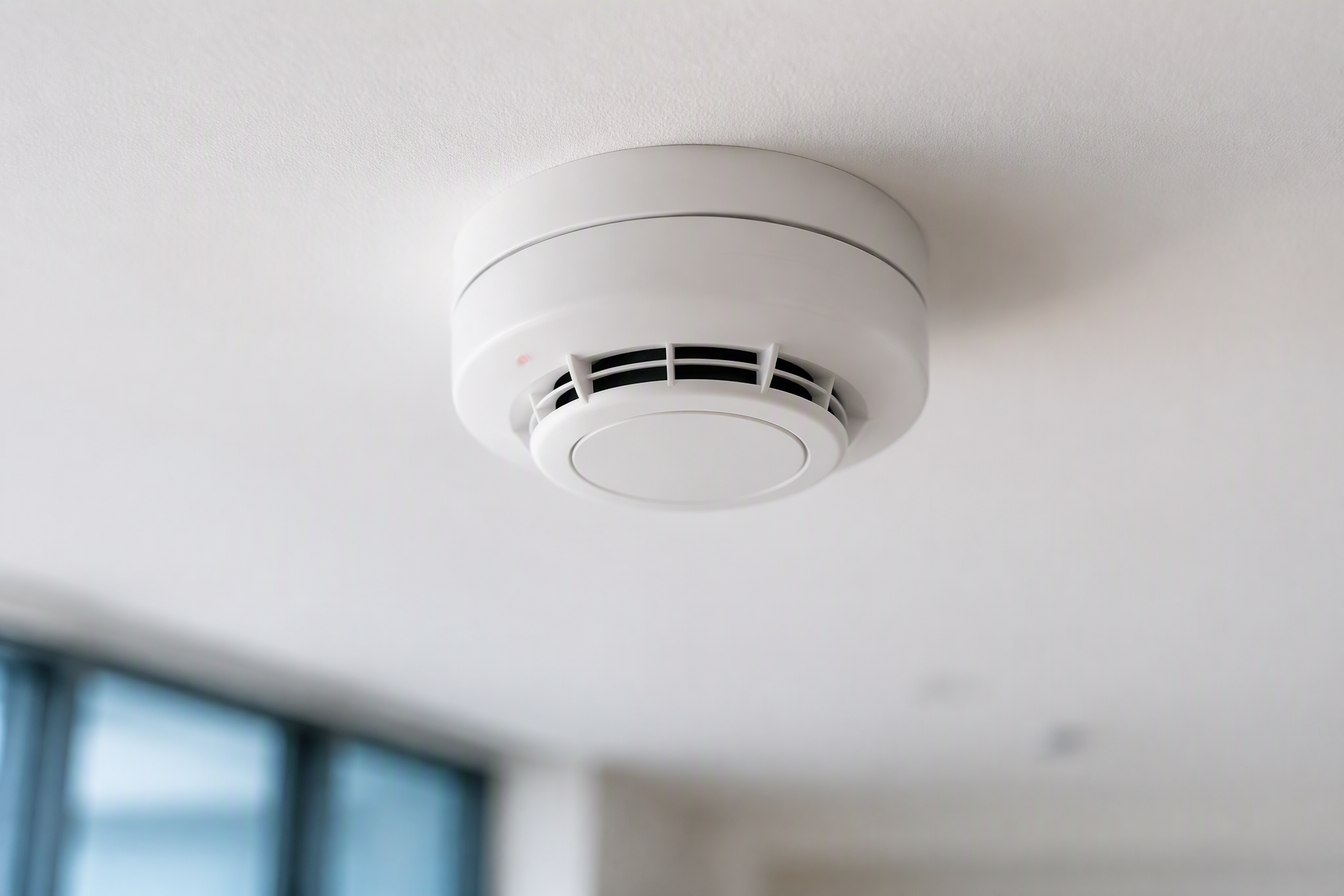
The debate over photoelectric vs ionization smoke detectors isn't just a technical curiosity — in NSW, it has real legal weight. I've been working across Western Sydney for a decade as a fire safety consultant, and I still encounter strata committees in Parramatta and Blacktown who aren't sure which type they have installed, let alone which one the law requires. The short answer is that NSW building regulations and Fire and Rescue NSW guidance now firmly favour photoelectric technology, and understanding why — and what that means for your Annual Fire Safety Statement obligations — could save you from penalties, failed inspections, and, most critically, a fire that claimed lives before anyone woke up. This article breaks down the science, the legislation, and the compliance obligations every NSW building owner and strata committee should understand.
How Each Technology Actually Works — and Why It Matters
Before we get into legislation, it helps to understand the fundamental difference between these two detector types, because the technology explains exactly why regulators made the choices they did.
Photoelectric smoke detectors operate using a light-scattering principle. An infrared light beam is used to detect smoke particles. In a clean chamber, the beam passes straight to a sensor without triggering an alarm. When smoke enters, visible particles scatter the beam onto a photosensitive receiver, triggering the alert. This makes them best for detecting smouldering fires that produce thick smoke before flames appear. Think of a couch or mattress quietly burning while occupants sleep — that's exactly the scenario photoelectric detectors are built for.
Ionization smoke detectors work very differently. They contain a small amount of radioactive material (Americium-241) that ionizes the air between two electrodes, creating a small constant electric current. Smoke entering the chamber disrupts this current, triggering the alarm. They are generally more responsive to fast flaming fires. However, they are prone to nuisance alarms from cooking fumes and are less effective at detecting smouldering fires.
From my experience on-site, the nuisance alarm problem is not a minor inconvenience — it is a genuine safety hazard. I have visited residential buildings in Western Sydney where tenants had removed or covered ionization-type detectors because they kept triggering during cooking. A disabled alarm offers zero protection. A major factor in the disablement of ionization smoke alarms by consumers is their demonstrated high incidence of false activation due to cooking fumes, gas heaters and the like. The implementation of smoke detection based upon light obscuration provides the additional benefit of mitigating the incidence of false activation, potentially leading to a reduction in disablement by consumers, thereby increasing the number of functional installed smoke alarms with a proportional increase in life safety.
What the Science Says: The ABCB Study and Fire and Rescue NSW's Position
The question of which technology performs better has been the subject of serious scientific scrutiny in Australia. The Australian Building Codes Board commissioned a study on the comparative performance of domestic ionisation and photoelectric smoke alarms, prepared by researchers from the Centre for Environmental and Risk Engineering at Victoria University. The study, published in July 2015, reviewed real-scale testing data and historical fire statistics from Australia, New Zealand, and the United States.
The key technical finding was clear: ionisation type alarms provide somewhat better response to flaming fires than photoelectric alarms, and photoelectric alarms provide often considerably faster response to smouldering fires than ionization type alarms. Given that smouldering fires — electrical faults, soft furnishings, overheated appliances — represent the most dangerous scenario for sleeping occupants, regulators and fire authorities drew an obvious conclusion.
Fire and Rescue NSW has been unambiguous in its own position. Fire and Rescue NSW advises that photoelectric alarms appear to provide a faster warning than ionisation alarms in most circumstances, and there is little appreciable difference in performance during flaming fires. To maximise the opportunity for early warning in all fire scenarios, FRNSW recommends the installation of photoelectric alarms, hard wired and interconnected, in all residential accommodation. If only installing one alarm, it should be a photoelectric alarm.
In my professional opinion, this is one of the clearest and most actionable positions any Australian fire authority has taken on detector technology. It isn't buried in technical appendices — it is Fire and Rescue NSW's published, publicly accessible advice to every building owner in the state.
NSW Legislation: What the Law Actually Requires
Understanding the regulatory framework is non-negotiable for building owners and strata committees in NSW. Compliance isn't optional, and the obligations have been in place for longer than many owners realise.
The legal requirements are outlined under Clause 146A of the Environmental Planning and Assessment Act 1979 and Division 7A of Part 9 of the Environmental Planning and Assessment Regulation 2000. These provisions have been updated and are now primarily governed by Part 13, Division 2, Clauses 94 to 96 of the Environmental Planning and Assessment (Development Certification and Fire Safety) Regulation 2021, which mandates that smoke alarms must be installed in all buildings in NSW where people sleep. The smoke alarms must meet the requirements of Australian Standard AS 3786.
Since 1 May 2006, smoke alarms have been mandatory in all residential buildings across NSW where people sleep, including houses, units, moveable dwellings, and holiday accommodation. All smoke alarms installed from 1 May 2017 must comply with Australian Standard AS 3786:2014.
What does that mean for detector type? Under current NSW building requirements and Fire and Rescue NSW guidance, photoelectric alarms are the required standard for new residential installations, new builds, and substantial renovations. Building certifiers will not sign off new work using ionization technology, and FRNSW strongly advises that any existing ionization alarms should be replaced with photoelectric units at the earliest opportunity. For rental properties, ionization alarms that repeatedly trigger nuisance alarms during cooking can create a breach of the landlord's maintenance obligations under the Residential Tenancies Act 2010, because a persistently disabled alarm is not a working alarm. Non-compliance with the installation and maintenance requirements under the NSW regulations can attract penalties of up to $5,500.
For strata buildings specifically, the obligations go further. Smoke alarms installed in Class 1b, 2, 3, 4 and 9a buildings as required by the Regulation must be added to the Fire Safety Schedule for the building, if one exists. The smoke alarms will then be subject to the ongoing maintenance and certification regime prescribed by Part 9 of the Environmental Planning and Assessment Regulation as for other essential fire safety measures. This means your smoke alarms are an essential fire safety measure — they form part of your Annual Fire Safety Statement (AFSS) obligations.
Disclaimer: This article provides general information about NSW fire safety legislation and does not constitute legal advice. Building owners and strata committees should obtain professional advice specific to their building's classification, construction date, and applicable development consent conditions.
Australian Standard AS 3786: What It Covers and the 2023 Update
AS 3786 is the product standard that underpins all smoke alarm compliance in Australia, and it has evolved significantly. AS 3786 is a product standard that specifies performance, testing, power options, interconnection capability, and marking for domestic smoke alarms that use scattered light (photoelectric), transmitted light, or ionisation. It applies to alarms intended for homes and similar residential settings.
The most recent version, AS 3786:2023, specifies requirements, test methods, and performance criteria for smoke alarms using scattered light, transmitted light, or ionization for residential applications. This fourth edition supersedes AS 3786:2014 and introduces new features such as interconnectable devices, combination smoke alarms, and requirements for radio frequency links.
Committee members involved in the development of AS 3786:2023 included the National Fire Industries Association, Australian Building Codes Board, Property Council of Australia, CSIRO, and the Fire Protection Association Australia. The involvement of these bodies reflects the standard's authority and broad industry endorsement.
From a compliance standpoint, building owners need to understand that if an alarm claims compliance with AS 3786, it has passed defined laboratory tests and meets functional criteria set for Australian conditions. Both AS 3786:2014 and AS 3786:2023 may be referenced depending on the building's approval documentation and the age of installed equipment. Smoke alarms must be replaced before their expiry — within 10 years of manufacture. This is one of the most overlooked compliance issues I encounter in buildings across Penrith, Liverpool, and Canterbury-Bankstown: alarms that are technically "installed" but are already expired based on their manufacture date.
Strata Buildings: Who Is Responsible and What the AFSS Requires
This is where things get genuinely complex, and where I see strata committees in Western Sydney make the most costly mistakes. Responsibility for smoke alarm compliance in a strata building is not always straightforward, and the Annual Fire Safety Statement obligations apply differently depending on what part of the building you're dealing with.
The Annual Fire Safety Statement (AFSS) certifies that the building as a whole complies with fire safety standards. However, it does not serve as a compliance certificate for individual units, including their smoke detectors. This distinction is critical. Owners corporations cannot assume that a building-wide AFSS automatically covers the smoke alarm inside Unit 14 or Unit 22.
For hardwired smoke alarms, issues should be reported to the owners corporation or strata manager to ensure timely maintenance. The owners corporation should engage qualified professionals to perform regular testing and maintenance of hardwired and common area smoke alarms. Strata managers will provide notice ahead of time so residents can make arrangements where access is needed, particularly for in-unit items like smoke alarms or fire doors.
For rental properties within strata buildings, it is a term of every residential tenancy agreement that the landlord will install and maintain smoke alarms according to the standards in the Environmental Planning and Assessment Regulation. Landlord fire safety responsibilities include ensuring working smoke alarms on every lease renewal, providing tenants with fire safety and evacuation information, and making sure all compliance certificates are up to date.
In my experience, the gap between common-area compliance (covered by the AFSS) and individual-lot compliance is the single biggest area of undetected non-compliance in residential strata buildings across Western Sydney. Strata committees often believe they are fully covered when they are not.
Key Compliance Requirements at a Glance
| Requirement | Photoelectric Alarm | Ionization Alarm |
|---|---|---|
| Permitted under NSW legislation | Yes | No — prohibited in NSW |
| Complies with AS 3786:2014 / 2023 | Yes (when certified) | Not for new residential installations |
| Recommended by Fire and Rescue NSW | Yes — strongly recommended | No |
| Effective for smouldering fires | Yes — considerably faster detection | No — significantly slower |
| Effective for fast flaming fires | Yes — comparable performance | Marginally faster (not practically significant) |
| Risk of nuisance alarms leading to disablement | Lower | Higher — documented compliance risk |
| Required service life / replacement interval | Maximum 10 years from manufacture date | N/A — not to be installed in NSW |
| Applies to AFSS essential fire safety measures | Yes — in Class 1b, 2, 3, 4, 9a buildings | N/A |
Common Mistakes I See in Western Sydney Buildings
After ten years of inspections across Blacktown, Fairfield, Cumberland, Parramatta, and Penrith, the same preventable errors come up again and again. Here are the most critical ones, and what you need to do about them.
Expired alarms still listed as compliant. Smoke alarms must be replaced within 10 years of manufacture. I regularly find alarms installed during a building's original construction that are well past this threshold. The manufacture date is stamped on the unit — check it.
Ionization-type alarms in older strata lots. Older buildings, particularly those constructed before FRNSW's photoelectric guidance became widely adopted, still contain legacy ionization units inside individual lots. These should be replaced with photoelectric alarms at the earliest opportunity, and the building owner or landlord carries responsibility for arranging that replacement.
Assuming the AFSS covers everything. As noted above, the AFSS covers the building's essential fire safety measures but does not automatically certify every individual unit's smoke alarm. Strata committees must address this separately.
No interconnection in new builds or major renovations. Interconnected alarms are mandatory for new builds and substantial renovations in NSW. They are not yet mandatory for all existing homes, but are strongly recommended by Fire and Rescue NSW. Missing this requirement during a renovation can create a significant compliance gap.
Alarms installed in non-compliant locations. Best practice includes alarms in bedrooms, hallways, and living areas with interconnection for maximum safety. The legal minimum of one alarm per level is just that — a minimum, not a safety guarantee.
Failing to test alarms annually. Smoke alarms must be tested annually and maintained to ensure functionality. In rental properties and strata buildings, this is not optional — it is a legal maintenance obligation under the Residential Tenancies Act 2010.
Western Sydney climate factors. Buildings in Western Sydney, particularly in areas like Penrith and the Hawkesbury fringe, experience extreme summer heat. High ambient temperatures can accelerate the degradation of alarm electronics and battery components. From my experience, buildings in these LGAs should be prioritising annual testing and not skipping scheduled inspections during or after summer.
Frequently Asked Questions
Can I still have ionization smoke detectors in my NSW building?
Under current NSW building requirements and Fire and Rescue NSW guidance, photoelectric alarms are the accepted standard for new residential installations. Building certifiers will not sign off new work using ionization technology, and FRNSW strongly recommends that any existing ionization alarms be replaced with photoelectric units at the earliest opportunity. Retaining legacy ionization units in a rental property that repeatedly cause nuisance alarms — leading residents to disable them — can also create a breach of a landlord's maintenance obligations under the Residential Tenancies Act 2010. If your building or individual strata lots still contain ionization-type units, replacement should be treated as a priority compliance action.
What Australian Standard do smoke alarms in NSW need to meet?
Under Part 13, Division 2 of the Environmental Planning and Assessment (Development Certification and Fire Safety) Regulation 2021, smoke alarms must be installed in all buildings in NSW where people sleep, and they must meet the requirements of Australian Standard AS 3786. All smoke alarms installed from 1 May 2017 must comply specifically with AS 3786:2014. The updated standard AS 3786:2023 is now published and incorporates interconnection and advanced detection features. When in doubt about which edition applies to your building, engage a licensed fire safety practitioner to review your Fire Safety Schedule.
Do smoke alarms form part of my Annual Fire Safety Statement?
Smoke alarms installed in Class 1b, 2, 3, 4 and 9a buildings as required by the Regulation must be added to the Fire Safety Schedule for the building if one exists. The smoke alarms will then be subject to the ongoing maintenance and certification regime as for other essential fire safety measures. In NSW, the Fire Safety Statement must be submitted annually. This means your photoelectric smoke alarms — particularly in common areas and any lots where hardwired alarms are installed — need to be inspected, tested, and certified by a qualified practitioner as part of your annual compliance cycle.
Who is responsible for smoke alarm compliance in a strata building?
Responsibility is shared, and the specifics depend on the alarm type and its location. For hardwired smoke alarms, issues should be reported to the owners corporation or strata manager to ensure timely maintenance. The owners corporation should engage qualified professionals to perform regular testing and maintenance of hardwired and common area smoke alarms. For individual lots with battery-powered alarms, it is a term of every residential tenancy agreement that the landlord will install and maintain smoke alarms according to the standards in the Environmental Planning and Assessment Regulation. Owners corporations, lot owners, and landlords each carry distinct obligations — and the Annual Fire Safety Statement process is one of the most effective tools for ensuring none of these fall through the cracks.
Book Your Smoke Alarm Compliance Review with Fire Safe Today
If you manage a strata building, own a residential investment property, or sit on an owners corporation committee anywhere in Western Sydney, the regulatory picture around photoelectric smoke detector compliance is clear — but navigating it across multiple lots, tenancy arrangements, and AFSS deadlines is genuinely complex. This is exactly where Fire Safe specialises.
Fire Safe is Western Sydney's trusted fire safety compliance partner, serving building owners, strata committees, and property managers across Parramatta, Blacktown, Penrith, Liverpool, Canterbury-Bankstown, Cumberland, and Fairfield. Our team can conduct a comprehensive smoke alarm compliance review of your building — verifying detector types, checking manufacture dates against the 10-year replacement rule, confirming AS 3786 certification, reviewing your Fire Safety Schedule, and ensuring your Annual Fire Safety Statement reflects the true compliance status of every essential fire safety measure. Don't wait for an inspection failure or a penalty notice to prompt action.
Call Fire Safe today on 1300 347 372, or use the contact form on this page to book your Annual Fire Safety Statement inspection or smoke alarm compliance review. Protect your occupants, protect your building, and protect yourself from liability — with a Western Sydney team that knows exactly what your building needs.
Disclaimer: This article is intended for general informational purposes only. It does not constitute legal advice. Building owners should seek independent professional advice regarding their specific compliance obligations."