Since 13 February 2026, essential fire safety measures in NSW class 1b and class 2 to class 9 buildings have had to be inspected and tested in accordance with AS 1851-2012.
Plenty has been written about what changed. Almost nothing has been written about what it actually looks like on site, which is where owners are coming unstuck.
The record keeping is the part people underestimate.
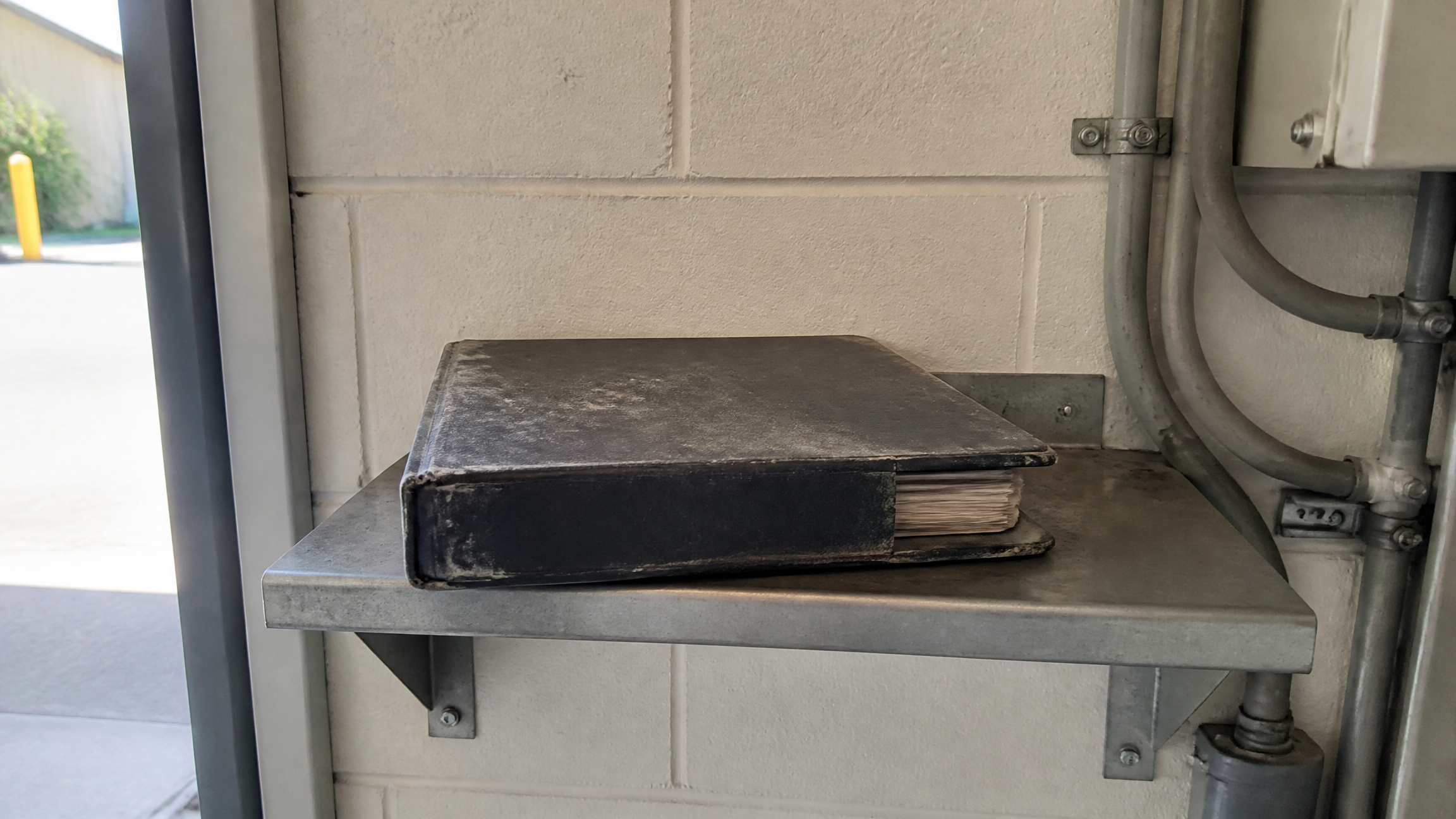
The logbook has to be a hard copy, on site
This is the requirement that surprises people most.
NSW guidance is explicit: AS 1851-2012 requires a hard copy logbook to be left on site at the completion of testing. Your contractor may also offer an electronic record, and plenty do. But as things stand, an electronic register does not replace the physical logbook.
So if your contractor emails you a PDF after every visit and nothing is kept in the building, you do not have what the standard requires. The email is a convenience. The logbook is the record.
One nuance worth noting: the NSW wording says the standard "does not allow for an electronic register to replace the physical logbook yet." That may change. It has not changed.
Seven years, and available for inspection
Owners must keep records in the manner prescribed by AS 1851-2012 for at least seven years, and make those records available for inspection.
"At least" is doing work in that sentence. Seven years is a floor, not a target.
Who can ask to see them: authorities with jurisdiction to inspect fire measures in buildings, which NSW guidance gives as including your local council and Fire and Rescue NSW. That list is not exhaustive.
Council is the regulatory authority for enforcing AS 1851-2012 compliance, so in practice council is usually who asks.
February 2027 and your first yearly service
Here is the part worth acting on now.
NSW guidance states the expectation that the one yearly service is completed in February 2027, regardless of the age of the building.
Read that again if you own an older building. The requirement applies to existing buildings, not just new ones, even where the building was approved and built long before the legislation.
So if your building has not had a full AS 1851-2012 yearly service since February 2026, that is the thing to get into the diary now rather than in February.
The commencement date was already deferred once, from 13 February 2025. It has not been deferred again.
When you change contractors, the logbook goes with the building
The logbook belongs to the building, not to your contractor.
NSW guidance sets the expectation that a building owner changing their AS 1851-2012 contractor hands the existing logbook to the incoming one.
This matters more than it sounds. A new contractor without your history does not know when your five yearly or ten yearly overhauls are due. They either have to assume, or start the clock again, and both of those cost you.
If you are switching providers, ask for the logbook in writing before the last invoice is paid. We cover the handover properly in can another fire company take over work someone else started.
What AS 1851-2012 does not cover
Two things owners regularly get wrong in the other direction.
It does not cover every measure. Some essential fire safety measures are not covered by AS 1851-2012. NSW guidance gives emergency exit lighting as an example, and "for example" means that is not a complete list. Where a measure is not covered by the standard, it still has to be maintained, but to the standard in your Fire Safety Schedule or to its original design.
It does not require you to upgrade anything. The standard sets out inspection, testing and maintenance procedures. It is not a trigger to replace compliant equipment, and NSW guidance says there is no requirement to have a passive fire register under AS 1851-2012.
If a provider tells you the February 2026 change means you have to upgrade a system, ask them to show you where.
Who is allowed to do the work
This one surprises people in both directions.
You do not need FPAS accreditation to do AS 1851-2012 work. NSW guidance says so plainly, and also says that being FPAS accredited does not automatically qualify someone to do it.
Accreditation and AS 1851 competence are two different things. Accreditation is what you need to assess measures and endorse the Annual Fire Safety Statement. Routine inspection, testing and servicing under AS 1851 is a different function.
What the owner has to do is ensure the maintenance is carried out by competent persons. And some work involving specialist trades will need a licence depending on its extent.
So when you are choosing a provider, "we are accredited" answers one question and not the other. Ask about both.
What a bad logbook actually looks like
We picked up a site where the previous provider's records were in such poor shape that we made the call to start again and build the logbook from scratch.
The walkthrough showed why that was the right call. There was a long list of equipment in that building that did not appear in the records at all. Fire extinguishers sitting well past their five yearly replacement. Fire hose reels that had never been tested.
None of that was visible on paper. On paper the building looked serviced. The gap only showed up when somebody walked the site and counted what was actually there against what had been written down.
That is what a badly kept logbook really costs you. Not a fine, at least not straight away. It costs you the history. Without the history nobody knows when the five yearly or ten yearly work falls due, so it quietly does not happen. That building had a provider. It had records. It still had hose reels nobody had ever tested.
Good is not complicated. Every item in the building is in the book. Every visit is written against it. Anyone who picks the site up after you can open it and know exactly where things stand.
What to do before February
Find your logbook. If you cannot find it in the building, you do not have one.
Check the last entry date. If it predates February 2026, you have a gap.
Check what your schedule lists against what has actually been serviced.
Book the yearly service if it has not been done since February 2026.
If you changed contractors recently, chase the old logbook now.
Not sure where you stand? Send us the address and your Fire Safety Schedule. We will tell you what the building needs and what should be in the logbook.
Call 1300 347 372 or start here.
One note on penalties
NSW Building Commission guidance refers to significant penalties for non-compliance with these obligations, including fines of $33,000 for individuals and $66,000 for corporations, under sections 81 and 81A of the Regulation.
The guidance does not say which specific offence those figures attach to. Treat them as an indication of the scale rather than a quote for any particular breach, and get your own advice if you are facing one.
Related reading: AS 1851-2012 is now mandatory in NSW · Can another fire company take over work someone else started · What is a Fire Safety Schedule in NSW
Disclaimer: This article is intended for general informational purposes only. It does not constitute legal advice. Building owners, strata committees, and property managers should seek independent professional advice regarding their specific compliance obligations under the Environmental Planning and Assessment Regulation 2021, AS 1851-2012, the National Construction Code, and any applicable Australian Standards. Requirements will vary depending on building class, the specifics of the Fire Safety Schedule, and the age and condition of installed passive fire measures.