Fire Blanket vs. Fire Extinguisher: What Western Sydney Building Owners and Strata Committees Actually Need to Know
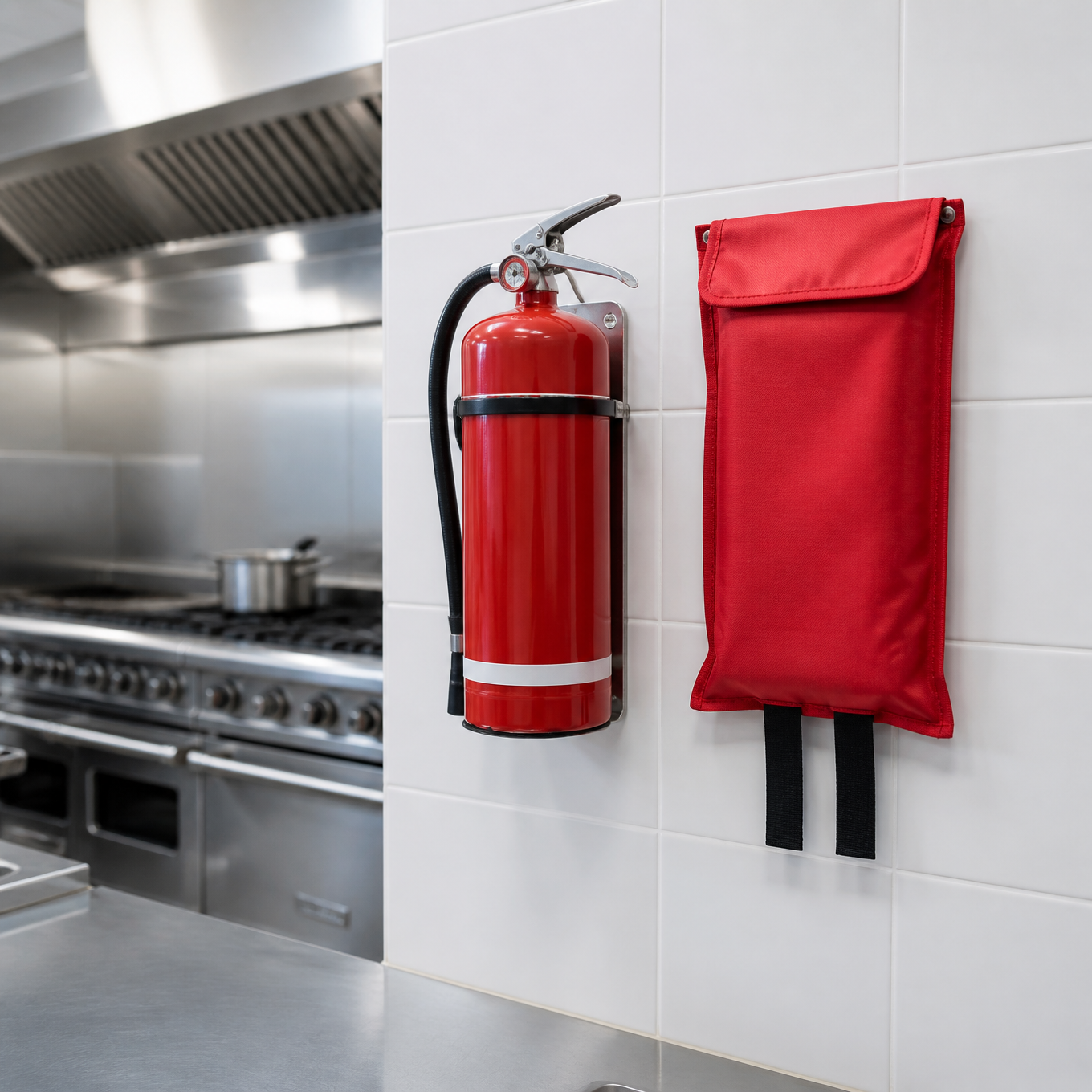
The question of fire blanket vs. fire extinguisher comes up constantly in my work — and it's one of the most misunderstood compliance topics I encounter across Western Sydney's strata complexes, mixed-use developments, and commercial buildings. Property managers often assume it's an either/or choice. Strata committees frequently over-rely on one and ignore the other entirely. In my professional opinion, that's a dangerous and potentially costly misread of both the risk environment and the regulatory framework. This article cuts through the confusion, draws on over a decade of on-site experience across Parramatta, Blacktown, Penrith, Liverpool, and surrounding LGAs, and tells you exactly what your building actually needs — and why the law in NSW leaves very little room for guesswork.
Understanding What Each Device Is Actually Designed to Do
Before I dive into compliance specifics, let me explain the functional difference — because getting this wrong in a real emergency has consequences that go well beyond a failed Annual Fire Safety Statement.
A fire blanket is a flexible sheet of fire-resistant material, typically woven fibreglass, designed to extinguish or smother a small, contained fire by cutting off its oxygen supply. Fire blankets work by cutting off the oxygen supply that a fire needs to burn — when placed correctly over a flame, the blanket smothers the fire, preventing it from spreading. They are governed in Australia by AS/NZS 3504, which stipulates the manufacturing and design standards for compliant blankets. From my experience, fire blankets are most effective on a small, shallow pan fire where the blanket can fully cover the burning surface — think a stovetop flare-up in a strata common-area kitchen or a small break room.
A fire extinguisher, by contrast, is an active suppression device that projects an extinguishing agent — water, CO₂, dry chemical powder, foam, or wet chemical — under pressure. The main purpose of AS 2444 is to cover the type of extinguisher required for the type of fire and the location of the portable fire equipment. Extinguishers are considerably more versatile across fire classes and scale of fire, but they require a degree of operator familiarity to be deployed correctly and safely.
The critical insight here — one I wish I could communicate to every strata committee I've ever briefed — is that these two devices are not interchangeable. They solve different problems. Fire blankets and extinguishers serve different purposes, and in most environments, the best approach is to have both.
The Australian Standards That Govern Both Devices
One thing I've noticed repeatedly on compliance walkthroughs is that building owners have a vague sense that "standards apply" but don't know which ones specifically govern what's on their wall. Let me be direct about this.
Two key Australian Standards frame the fire blanket vs. fire extinguisher decision for commercial and multi-residential buildings:
AS/NZS 3504 — The manufacturing and performance standard for fire blankets. Any blanket installed in a commercial or common-area setting in NSW should carry this certification mark. Non-certified blankets may look identical but can fail under realistic fire conditions.
AS 2444–2001 — The selection and location standard for portable fire extinguishers and fire blankets. AS 2444 is concerned primarily with the initial selection, placement, and accessibility of portable fire extinguishers and fire blankets. This standard is crucial in the design phase of a building's fire safety strategy, providing detailed guidelines on how to effectively select the appropriate types of extinguishers and fire blankets based on the distinct fire risks associated with different areas within a facility.
AS 1851–2012 — The routine servicing standard. AS 1851–2012 relates to the routine service of fire protection systems and equipment. It sets out requirements for inspection, testing, preventive maintenance and survey of fire protection systems and equipment. From 13 February 2026, AS 1851–2012 is mandatory under the Environmental Planning and Assessment (Development Certification and Fire Safety) Regulation 2021. This is the standard that tells your fire safety contractor how often to inspect and test every piece of equipment — including both blankets and extinguishers — in your building.
AS 1851 caters to various sectors, including residential, commercial, and industrial environments, making it integral to fire safety protocols across Australia. In NSW, it now has the force of law behind it — not just best practice.
A note on placement: a fire blanket must be located in a conspicuous and easily accessible position close to the specific fire risk it is intended to cover. The blanket's container must be free from any obstruction that could hinder its rapid removal. In commercial applications, a location sign is mandatory, and the blanket or its sign must be mounted so it is 2.0 metres above the floor level for clear visibility. I've failed buildings on their AFSS assessment for nothing more than a blanket mounted at the wrong height or placed directly next to the heat source rather than beside the exit route. Don't give your council that ammunition.
Fire Classes: Why "One Size Fits All" Thinking Gets Buildings in Trouble
From my experience, the single most dangerous assumption I see in Western Sydney buildings is that a single ABE powder extinguisher near the front lobby satisfies the building's entire fire equipment obligation. It does not. AS 2444–2001 bases its entire selection methodology on a system of fire classification that categorises fires based on their fuel source. This system compels a shift in thinking from a generic "we need a fire extinguisher" to the critical question, "What is most likely to burn in this specific area?"
Australia recognises six classes of fire. For building owners and property managers, the most practically significant are:
Class A — Ordinary combustibles (wood, paper, textiles). Common in storage areas, offices, and common corridors.
Class B — Flammable liquids. Relevant in basement carparks, maintenance areas, and industrial tenancies.
Class E — Electrical equipment. Relevant virtually everywhere — switchboards, server rooms, lifts.
Class F — Cooking oils and fats. Wet chemical extinguishers are the only type rated for Class F fires — cooking oils and fats. A fire blanket alone is not an acceptable compliance solution for a commercial kitchen with a deep fryer.
Using any other extinguisher type on a cooking oil fire is dangerous. Water or foam on a deep fryer can cause a violent steam explosion that throws burning oil across the room. ABE powder is ineffective on Class F fires and may appear to extinguish them while the oil remains at ignition temperature.
In professional opinion, this is where I see the most dangerous gap in Western Sydney's mixed-use strata buildings — a retail food tenancy on the ground floor with a Class F risk, and a building fire safety schedule that hasn't been updated to reflect that tenancy change. If your building's use has changed since the fire safety schedule was last reviewed, that schedule needs reassessment — urgently.
The Compliance Comparison: What Your Building Is Actually Required to Have
The table below summarises how fire blankets and portable fire extinguishers compare across the key compliance dimensions that matter most to building owners and strata committees in NSW. This is not a product comparison — it's a regulatory and risk-based framework to help you understand your obligations.
| Compliance Dimension | Fire Blanket | Portable Fire Extinguisher |
|---|---|---|
| Governing Australian Standard | AS/NZS 3504 (manufacture); AS 2444 (selection & location) | AS 1850 (testing/rating); AS 2444 (selection & location) |
| Routine Servicing Standard | AS 1851–2012 | AS 1851–2012 |
| Typical Service Interval | Annual inspection; replace if damaged or deployed | Six-monthly service; pressure check, weight check, tag update |
| Mandatory in Commercial Kitchens? | Recommended for small pan fires; NOT a substitute for Class F extinguisher | Yes — wet chemical (Class F) extinguisher is required under AS 2444 |
| Operator Training Required? | Minimal — simple deployment, low residue | Recommended — correct agent, PASS technique, exit awareness |
| AFSS Essential Fire Safety Measure? | Yes — if listed on the building's Fire Safety Schedule | Yes — if listed on the building's Fire Safety Schedule |
| NCC Compliance Pathway | Compliance with AS 2444 satisfies NCC performance requirements | Compliance with AS 2444 satisfies NCC performance requirements |
| Common Placement Risk | Mounted too low, too close to heat source, no signage | Wrong agent type for fire class, obstructed access, out-of-date tag |
Both devices, when listed in a building's Fire Safety Schedule, become essential fire safety measures that must be maintained and declared compliant as part of your Annual Fire Safety Statement. An Annual Fire Safety Statement is a mandatory legal declaration required under the Environmental Planning and Assessment (Development Certification and Fire Safety) Regulation 2021 for most commercial, industrial, and multi-residential buildings across New South Wales. The AFSS regime exists to confirm that every essential fire safety measure installed in a building has been inspected, tested, and assessed as capable of performing to the standard specified in the building's Fire Safety Schedule.
The Legal Obligations on NSW Building Owners and Strata Committees
I want to be very clear on something that gets misunderstood repeatedly in my client conversations: the obligation to maintain fire safety equipment doesn't sit with your tenant, your managing agent, or your fire safety contractor. It sits with the building owner — and in a strata context, that means the owners corporation.
Building owners must ensure essential services are maintained in accordance with AS 1851–2012. It's the responsibility of the building owner to ensure that their building is meeting the requirements of the standard. Examples of building owners include strata committees, owners corporations, and developers prior to occupation certificate.
Under Part 12 of the Regulation, building owners must issue an AFSS every twelve months, lodge it with the local council and the Commissioner of Fire and Rescue NSW, and prominently display a copy within the building alongside the current Fire Safety Schedule. This is not a voluntary compliance exercise — it is a statutory obligation with significant legal consequences for non-compliance.
The consequences of non-compliance are significant. Building owners and managers may face fines and legal liability if their fire protection equipment is not properly maintained according to the standard. In the event of a fire, insurance companies may also refuse to cover damages or losses if the equipment was not properly maintained. This can result in significant financial losses for the building owner or manager.
In my years of work across the Cumberland, Fairfield, and Canterbury-Bankstown areas in particular, I've seen owners corporations face council enforcement notices — and the associated stress, legal cost, and reputational damage — because they treated AFSS as an administrative formality rather than a live compliance obligation. Don't be that building.
Common Mistakes I See in Western Sydney Buildings
After a decade of on-site work from Penrith to Liverpool, here are the fire blanket and extinguisher mistakes I see most often — all of which have contributed to failed AFSS assessments or, worse, inadequate fire response in real incidents:
Treating a fire blanket as a kitchen's sole fire safety measure. In any commercial kitchen setting, a fire blanket for small pan fires is a complement — not a replacement — for a properly rated wet chemical extinguisher. In a commercial kitchen, a wet chemical extinguisher is a legal requirement under Australian Standards regardless of whether a fire blanket is also installed.
Installing the wrong extinguisher type for the risk. I walked through a café tenancy in Blacktown last year where the only extinguisher was a CO₂ unit. CO₂ has no Class F rating whatsoever. The tenant was completely unaware. That building was simultaneously non-compliant and genuinely dangerous.
Failing to update the Fire Safety Schedule after a tenancy change. A new food business moving into a ground-floor tenancy fundamentally changes the fire risk profile of that building. The schedule — and the suppression equipment — need to reflect that.
Mounting fire blankets directly beside the cooktop. Mount the fire blanket pouch on the wall near the kitchen exit — not directly beside the stove or cooktop. If a stovetop fire breaks out, you must be able to reach the blanket without passing through the flames.
Ignoring service tags. An extinguisher with an out-of-date service tag is a non-compliant essential fire safety measure, full stop. The standard emphasises the importance of maintaining accurate records of inspections, tests, and maintenance activities. This documentation serves as evidence of compliance and helps track the performance of fire protection systems over time.
Assuming "it came with the building" means it's compliant. Installed does not mean maintained. Maintained does not mean correctly specified. I've found correctly maintained extinguishers of entirely the wrong type for the current tenancy — and found fire blankets on buildings where the Fire Safety Schedule didn't even list them, meaning they were invisible to the compliance process entirely.
So Which One Should Your Building Actually Have?
In professional opinion, this is the wrong question — because for the vast majority of commercial, mixed-use, and multi-residential buildings in Western Sydney, the answer is almost always: both, correctly specified, correctly placed, and correctly maintained under AS 1851.
The right question is: which specific types of extinguisher, and where should each piece of equipment be positioned, given the actual fire risk profile of each area within my building?
That determination flows directly from AS 2444 and your building's Fire Safety Schedule — not from a generic "one extinguisher per floor" approach. By selecting, locating, and distributing portable fire extinguishers in full compliance with AS 2444, a project is automatically deemed to have satisfied the corresponding performance requirements of the NCC. That's the standard your accredited practitioner will apply when assessing your building for AFSS purposes.
For a typical Western Sydney strata complex — say, a mixed-use building in Parramatta with a café on ground floor, retail on level one, and residential above — the compliant setup would likely include: wet chemical extinguisher(s) in the commercial kitchen area, ABE powder or CO₂ units across common corridors and the carpark, a fire blanket in any food preparation area, and servicing records for all of the above maintained according to AS 1851–2012. Your Accredited Practitioner (Fire Safety) — the only individual authorised under NSW law to sign off on your AFSS — will confirm exactly what your building requires. An Accredited Practitioner (Fire Safety), formerly known as a "competent fire safety practitioner", is a qualified individual authorised to assess essential fire safety measures. They are registered with Fire and Rescue NSW, and are the only authorised individuals who can sign off on your AFSS.
Frequently Asked Questions
Does my strata building legally need both a fire blanket and a fire extinguisher?
It depends on what's listed in your building's Fire Safety Schedule and what risks exist in each area of the building. For most mixed-use and residential strata buildings in NSW, portable fire extinguishers are an essential fire safety measure and are mandatory. Fire blankets are required where specified — particularly in food preparation areas. Both are governed by AS 2444 for selection and placement, and both must be serviced under AS 1851–2012. If you're unsure what your Fire Safety Schedule currently lists, that's a conversation to have with your Accredited Practitioner (Fire Safety) before your next AFSS due date.
Can a fire blanket replace the need for a wet chemical extinguisher in our building's commercial kitchen?
No — not under Australian Standards. A fire blanket rated to AS/NZS 3504 can help smother a small, contained pan fire. However, for any fire that has spread beyond a single pan, involves deep-fryer quantities of oil, or where the blanket cannot fully cover the burning surface, a wet chemical extinguisher is required. Wet chemical extinguishers are the only type rated for Class F fires — cooking oils and fats. In a commercial kitchen, both are considered best practice, and the extinguisher is mandated under AS 2444 regardless of whether a blanket is also present.
How often do fire extinguishers and fire blankets need to be serviced in NSW?
Under AS 1851–2012 — which has been mandatory in NSW for all Class 1b through Class 9 buildings from 13 February 2026 — portable fire extinguishers typically require six-monthly inspection and servicing, including pressure checks, weight verification, and tag updates. Fire blankets require annual inspection and must be replaced if they show signs of damage, contamination, or have been deployed. All service activities must be documented, as that documentation supports your Annual Fire Safety Statement. Your accredited fire safety contractor will maintain a service logbook aligned to AS 1851 requirements.
What happens if our building's fire equipment isn't compliant when the AFSS is due?
If your essential fire safety measures — including fire extinguishers or fire blankets listed on your Fire Safety Schedule — are not compliant, your Accredited Practitioner (Fire Safety) cannot sign off on your AFSS. A failure to lodge a valid AFSS with your local council and Fire and Rescue NSW by the due date exposes the building owner and owners corporation to council enforcement action, including fines. In serious cases, this can escalate through to the Land and Environment Court. Beyond the legal exposure, non-compliant or absent fire equipment creates direct physical risk to building occupants — which is the liability no building owner wants to face in the aftermath of a real incident. The solution is proactive: book your compliance inspection well before your AFSS due date.
Book Your Fire Safety Compliance Review with Fire Safe Today
Whether your building needs a full fire safety equipment audit, a review of your Fire Safety Schedule, or a complete Annual Fire Safety Statement inspection and sign-off under the Environmental Planning and Assessment (Development Certification and Fire Safety) Regulation 2021, Fire Safe is the Western Sydney specialist you need on your side. We service strata committees, owners corporations, and property managers across Parramatta, Blacktown, Penrith, Liverpool, Canterbury-Bankstown, Cumberland, and Fairfield — and we know the specific building stock, council requirements, and fire risk profiles of these LGAs inside out.
Don't leave your AFSS to the last minute, and don't assume that "we've got an extinguisher" means your building is compliant. After ten years of walking through Western Sydney buildings, I can tell you: the gap between what's installed and what's actually compliant is wider than most building owners realise. Call Fire Safe on 1300 347 372 or use the contact form on this page to book your AS 1851 routine servicing inspection or Annual Fire Safety Statement assessment. Our team will confirm exactly what your building needs — and make sure you can prove it.
Disclaimer: This article is general in nature and is intended to provide an overview of fire safety compliance considerations for building owners and strata committees in NSW. It does not constitute legal, building compliance, or fire engineering advice specific to your property. Building owners should engage a licensed and accredited fire safety practitioner to assess their specific obligations under applicable legislation and Australian Standards. References to legislation and standards are current to the date of publication and may be subject to amendment.