Fire Extinguisher Compliance for Strata Buildings in NSW: Who Is Actually Responsible and What Changed in 2026?
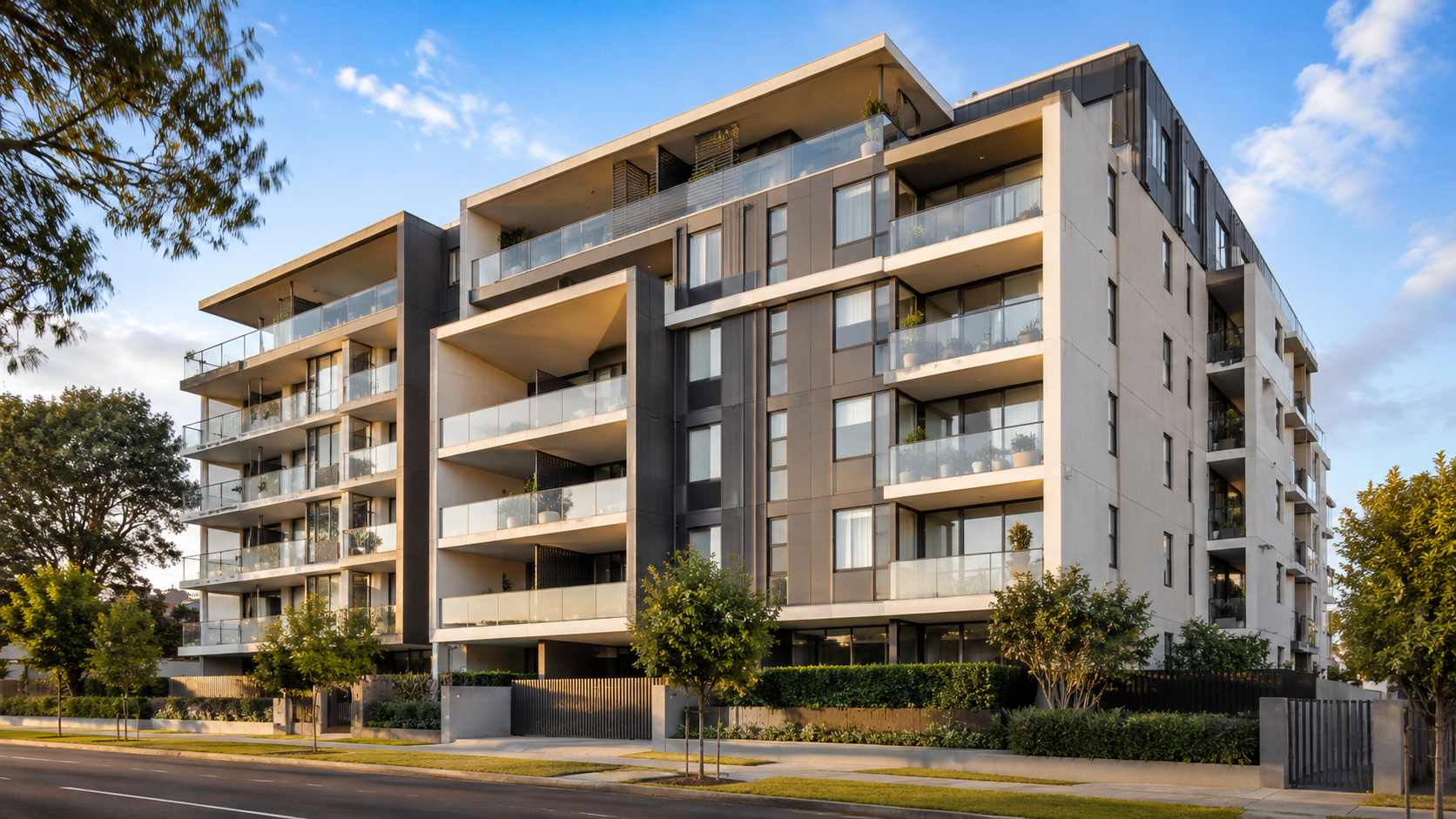
If you've ever sat in an owners corporation meeting and watched the room go silent when someone asks "who's actually responsible for the fire extinguishers?" you're not alone. In my ten years working as a fire safety consultant across New South Wales, I've seen this question create genuine confusion, costly disputes, and in the worst cases, serious non-compliance. Fire extinguisher compliance for strata buildings in NSW is governed by a layered web of legislation, Australian Standards and shared duties that trips up even experienced strata managers. With major regulatory changes that came into effect on 13 February 2026, the stakes have never been higher. This guide cuts through the noise and gives you a straight answer on who is responsible for what and what you need to do about it right now.
The Legal Foundation: Which Laws Actually Govern Fire Extinguisher Compliance in NSW Strata?
Before diving into who does what, it's worth understanding the legal scaffolding that everything hangs off. Fire safety compliance in NSW is governed by a combination of legislation, standards, and local council enforcement including the Environmental Planning and Assessment Act 1979, the Environmental Planning and Assessment Regulation 2021, and the Building Code of Australia (BCA), which collectively form the legal backbone for mandatory fire safety systems that NSW buildings must have. For strata schemes specifically, an owners corporation governed by the Strata Schemes Management Act 2015 (SSMA) will have an obligation to maintain and repair all common property.
The single biggest regulatory shift in recent memory arrived in February 2026. As of 13 February 2026, new fire safety requirements became mandatory for strata buildings across NSW under the Environmental Planning and Assessment (Development Certification and Fire Safety) Regulation 2021, with Australian Standard AS 1851-2012 for routine service of fire protection systems and equipment now the mandatory benchmark for the inspection, testing, and maintenance of essential fire safety measures. All Class 1b and Class 2 to Class 9 NSW buildings, new and existing must ensure essential fire safety systems listed in a building's Fire Safety Schedule are inspected and tested in accordance with AS 1851-2012. From my experience, a large number of strata committees were still relying on informal, ad-hoc servicing arrangements right up until this deadline that era is now definitively over.
Disclaimer: This article is for general informational purposes only and does not constitute legal or fire safety advice. Always consult a licensed Accredited Practitioner (Fire Safety) and seek independent legal advice for your specific building and circumstances.
The Owners Corporation: The Buck Stops Here
In my professional opinion, this is the single most misunderstood point in strata fire safety: the owners corporation carries the primary legal liability, full stop. In a strata scheme, the owners' corporation is ultimately responsible for ensuring that fire safety compliance requirements, including the Annual Fire Safety Statement (AFSS) and fire safety schedule, are met. This responsibility includes making sure that maintenance is carried out on fire safety systems and that the AFSS is lodged with the local council.
Owners Corporations remain legally responsible for ensuring inspections occur, records are kept, and defects are addressed, with significant penalties applying for non-compliance. Those penalties are not trivial, penalty infringement notices can escalate from $500 in week one to $3,000–$4,000 per week beyond week four and it doesn't stop at fines. Insurance implications are serious too claims may be declined if fire safety systems were not properly maintained, and policies may be cancelled or renewal refused for buildings with unresolved defects.
I've personally walked into strata buildings in Western Sydney where the owners corporation had delegated everything to a strata manager under a vague "they'll handle it" arrangement, with no written contract terms specifying AS 1851 compliance. When council issued a fire order, every committee member was shocked to learn the legal exposure sat squarely with them. While the legal responsibility for AFSS compliance rests solely with the building owner (the Owners Corporation), the coordination is typically managed by the strata manager coordination and legal liability are two very different things.
The Role of Strata Managers, Committees, and Tenants And Where Confusion Breeds Non-Compliance
One of the most common mistakes I see is the blurring of roles between the owners corporation, the strata manager, and individual lot owners. Responsibility is often misunderstood in NSW because multiple parties are involved in a building's operation. Owners, tenants, strata committees, and managing agents all play roles but they do not carry equal legal obligations.
Fire safety contractors are responsible for carrying out inspections and recording results in the on-site fire safety logbook. Strata managers do not perform or certify inspections but coordinate the process on behalf of the Owners Corporation. Strata managers play an essential role in overseeing fire safety compliance and ensuring contractors are engaged to perform inspections and necessary repairs. Contractors must be licensed professionals, and their work must be documented and reported.
As for individual lot owners and tenants: individual lot owners are responsible for fire safety measures located entirely within their lot, provided those measures are not classified as common property. In many leases, tenants are responsible for maintaining portable fire extinguishers within their tenancy or conducting staff fire training. However and this is critical these private contracts do not override NSW law. If a system fails and the Annual Fire Safety Statement is incorrect or missing, authorities will pursue the owner first. I've seen this exact scenario play out in mixed-use strata buildings in the Inner West where a commercial tenant had "agreed" to maintain their tenancy extinguishers, but the lease clause was unenforceable and the owners corporation wore the compliance penalty.
Fire Extinguisher Types, Placement, and the AS 2444 Standard
Getting the right extinguisher in the right location is where practical fire safety meets regulatory compliance. The selection and placement of portable fire extinguishers in Australian strata buildings is governed by AS 2444. AS 2444 is the Australian Standard that sets the requirements for portable fire extinguishers and fire blankets, providing a structured framework for classifying fire hazards and determining the correct type, number, and location of fire safety equipment.
From my hands-on experience testing extinguishers across dozens of Sydney apartment buildings, here is how the main types stack up for common strata scenarios:
| Extinguisher Type | Colour Band | Best For (Strata Context) | Avoid Using On | Approx. AUD Price (5kg unit) | Compliant With |
|---|---|---|---|---|---|
| ABE Dry Chemical Powder (DCP) | White | Corridors, car parks, plant rooms, electrical switchboards | Sensitive electronics (leaves corrosive residue) | $80–$130 | AS/NZS 1841, AS 2444 |
| Carbon Dioxide (CO₂) | Black | Server rooms, electrical equipment rooms, lift motor rooms | Class A fires (wood/paper) — limited effectiveness | $180–$280 | AS/NZS 1841, AS 2444 |
| Wet Chemical | Oatmeal/Light Grey | Common-area kitchens, BBQ areas, café tenancies | Electrical fires — risk of electrocution | $120–$200 | AS/NZS 1841, AS 2444 |
| Water/Foam | Red (no band) / Blue | Rubbish rooms, general common areas with Class A hazards | Electrical or grease fires | $70–$120 | AS/NZS 1841, AS 2444 |
| Lithium-Ion Specialist (e.g., Class F-500) | Varies by brand | EV charging areas, e-bike storage rooms | Standard fires (over-specified for general use) | $250–$500+ | AS/NZS 1841 + AFAC 2024 advisory |
Placement matters just as much as type, each extinguisher shall be located in a conspicuous, readily accessible location and Fire and Rescue NSW recommends that a surrounding clearance of a minimum of 1000mm be maintained around each extinguisher. The top handle of the extinguisher must be no higher than 1200mm from the floor to ensure it is within easy reach for most people, and the bottom of the extinguisher must be no less than 100mm from the floor to keep it secure. Extinguishers available from retailers must still be installed and commissioned by a licensed technician in a strata context to satisfy AS 2444 and AS 1851 requirements.
An emerging compliance issue I'm seeing more frequently in newer Sydney and Parramatta high-rises is inadequate coverage in e-bike and EV charging areas. Strata committees need to review their fire safety arrangements in bike storage rooms, as standard dry powder will not stop a battery fire, this is a gap I urge every strata committee to audit immediately.
The Annual Fire Safety Statement (AFSS): What It Is and How Often It's Required
The Annual Fire Safety Statement is the cornerstone compliance document for NSW strata buildings. The AFSS is a legal document that confirms a building complies with fire safety standards as outlined in the Environmental Planning and Assessment Regulation 2000. It is required to be lodged with local councils, and it outlines that all fire safety measures in the building are operational and compliant with legislation. This certificate must be sent to the Commissioner of Fire and Rescue NSW via email, as well as to the local council, and a copy along with the latest Fire Safety Schedule must be displayed in a prominent location within the strata building.
As of 2026, building owners must ensure that the person performing the assessment is an Accredited Practitioner (Fire Safety) and that all maintenance follows the AS 1851:2012 standard to avoid liability and ensure the statement is legally valid. NSW councils take AFSS deadlines seriously and missing a due date can result in fines, even if inspections were completed late.
Under AS 1851, inspection frequencies are now mandated and structured. Fire extinguishers require six-monthly inspection and annual maintenance, Emergency lighting needs six-monthly and annual. Fire alarm systems require monthly, six-monthly, and annual testing components. Record-keeping obligations are equally strict. Building owners must keep records in the manner prescribed by AS 1851-2012 for at least 7 years and make the records available for inspection. The person who completes the test must leave a physical logbook on site after inspections — electronic records are not enough.
In my professional opinion, the single biggest administrative failure I see in NSW strata is incomplete or missing baseline data under AS 1851. Older buildings may find that records are incomplete this is common and can be addressed in an orderly way. If your building's service history has gaps, get a fire safety practitioner to establish baseline data as your first priority, before the next AFSS is due.
Common Compliance Mistakes I See in NSW Strata — And How to Avoid Them
After a decade on-site, I can tell you that non-compliance rarely comes from deliberate neglect. More often, it stems from misunderstanding, administrative gaps, or outdated arrangements that nobody thought to update. Here are the most frequent mistakes I encounter:
Using an unaccredited contractor. Only an Accredited Practitioner (Fire Safety) an APFS can endorse the Annual Fire Safety Statement. If your current "fire guy" isn't accredited under the Fire Protection Accreditation Scheme (FPAS), their signature is worthless and your building is non-compliant. Always verify credentials through the NSW Fair Trading register before signing any service contract. Consider suppliers such as → Fire Protection Association Australia (FPAA) member contractors to find accredited practitioners in your area.
Blocking extinguishers with furniture or stored items. I have walked the corridors of buildings in Homebush and Chatswood where extinguishers were obscured behind bicycles, prams, and recycling bins. Storage in common areas must not obstruct fire doors, hydrants, extinguishers, or evacuation routes, this is an AFSS fail waiting to happen.
Assuming tenants manage their own extinguishers. Common compliance mistakes in commercial properties include relying on outdated inspections, assuming tenants will manage all equipment, or failing to update fire safety schedules after fit-outs or changes in use.
Neglecting the AFSS lodgement deadline. A common pitfall is the failure to engage an accredited professional in time or neglecting to maintain fire safety equipment, which can lead to non-compliance. I recommend booking your fire safety contractor at least 90 days before your annual due date — especially heading into summer in NSW, when contractors are stretched thin.
Using wrong extinguisher types. From my experience testing equipment in mixed-use strata buildings, I repeatedly find standard ABE powder extinguishers mounted outside kitchens that handle cooking oils. Wet chemical extinguishers are specifically designed for Class F fires involving cooking oils and fats in kitchens. Placing an ABE unit near a deep fryer isn't just ineffective — it can make a fire worse.
Not budgeting for 5-year and 10-year services. AS 1851 mandates inspection frequencies including 5-yearly, 10-yearly, and 25-yearly inspections — significant services that should be planned for within the Capital Works Fund. I've seen owners corporations hit with surprise bills of $15,000–$40,000 because hydrostatic testing and major services were never included in their long-term financial plan.
What Individual Lot Owners and Residents Should Actually Do
Even if you're not on the strata committee, you are not off the hook when it comes to fire safety. Compliance from all owners is essential for the safety of the entire building. Here's what I advise individual lot owners and tenants to do in practice.
First, understand the boundary between common property and your lot. Understanding the difference between common property and private lots is critical — misclassification is a frequent cause of non-compliance and disputes. Extinguishers in corridors, stairwells, car parks, and plant rooms are the owners corporation's responsibility. Anything wholly within your unit is yours.
Second, think seriously about a personal extinguisher inside your unit. Individual apartments and units within a strata building are generally covered by the building's fire safety system — extinguishers in common areas (corridors, car parks, plant rooms) are the responsibility of the strata manager or body corporate, and must comply with AS 2444 and be serviced under AS 1851. However, a personal unit extinguisher can be the difference between a contained kitchen fire and a full evacuation. A quality 2.5kg ABE dry powder unit from brands like → Flamestop or → Chubb Fire and Security retails for approximately $60–$120 AUD and is available through Bunnings, Blackwoods, and online fire safety retailers.
Third, never tamper with fire safety measures. In NSW strata, the front door of every unit is a "fire safety measure." Residents who install deadlocks or peepholes that are not fire-rated void the door's certification. I've personally had to issue defect notices on multiple buildings in the Hills District after residents fitted unapproved hardware on their front doors during COVID-era renovations — costs for rectification ran into thousands per unit. Tenants must not damage fire safety systems, block exits, interfere with alarms, or create new fire risks through unsafe practices.
Frequently Asked Questions
Who is legally responsible for fire extinguisher compliance on common property in a NSW strata building?
The owners corporation holds primary legal responsibility for all fire safety measures on common property, including fire extinguishers. The owners corporation bears responsibility for common property fire safety measures, creating ongoing compliance obligations that demand systematic attention throughout building lifecycles. While a strata manager may coordinate the process, the legal liability does not transfer to them. If a building is found non-compliant, it is the owners corporation — and by extension, every lot owner within it — that faces fines and enforcement action from local council and Fire and Rescue NSW.
How often must fire extinguishers be serviced in a NSW strata building under AS 1851?
Fire extinguishers require six-monthly inspection and annual maintenance under AS 1851-2012, which became the mandatory standard for NSW strata buildings from 13 February 2026. This means a qualified, accredited fire safety contractor must visit your building at least twice per year to inspect extinguishers, and a full service (including internal inspection, pressure check, and tag update) must occur annually. Hydrostatic pressure testing is typically required every 5 years for CO₂ extinguishers and every 5 years for powder and water/foam extinguishers. All service records must be kept on-site in a physical logbook for a minimum of 7 years.
Does my strata building need to upgrade its fire safety systems to comply with the 2026 changes?
No — at least not automatically. There is no requirement to upgrade existing fire safety systems to current building standards, provided they are maintained and capable of performing to the standard required under your existing Fire Safety Schedule. The 2026 changes focus on maintenance, servicing, and record-keeping — not mandatory system upgrades. However, if inspections under AS 1851 reveal that existing extinguishers or other fire safety measures cannot perform to the standard specified in your Fire Safety Schedule, rectification is required. Always get written advice from your Accredited Practitioner (Fire Safety) before assuming no upgrades are needed.
What happens if our strata building fails to lodge the Annual Fire Safety Statement on time?
Late submission can lead to fines and compliance action from the local council, even if inspections were completed. Penalty infringement notices can escalate from $500 in week one to $3,000–$4,000 per week beyond week four. Beyond direct fines, the insurance consequences can be severe. AFSS compliance is closely tied to a building's insurance coverage, and insurers may reject claims or cancel coverage for buildings with outstanding compliance obligations. In my experience, the cost of proactive compliance is always a fraction of the cost of reactive enforcement — financially and reputationally.
Don't Leave Fire Extinguisher Compliance to Chance — Act Now
Fire extinguisher compliance for strata buildings in NSW is no longer a box-ticking exercise — the 2026 AS 1851 reforms have created a genuinely higher standard of accountability, documentation, and professional engagement. The owners corporation is legally on the hook for common property, individual lot owners are responsible within their units, and strata managers are coordinators, not legally liable parties. Getting this wrong has real consequences: fines that compound weekly, insurance policies that can be voided, and most importantly, lives at risk. From my experience, the buildings that get this right are the ones that treat fire safety as an ongoing management priority — not an annual scramble. If you're unsure where your building stands, engage an Accredited Practitioner (Fire Safety) for a gap analysis today, review your current contractor's FPAS accreditation, and make sure your Capital Works Fund accounts for the major services AS 1851 now mandates. The cost of getting it right is always less than the cost of getting it wrong.