Fire Extinguisher Servicing in NSW: The 6-Month Rule, AS 1851-2012, and Everything You're Probably Getting Wrong
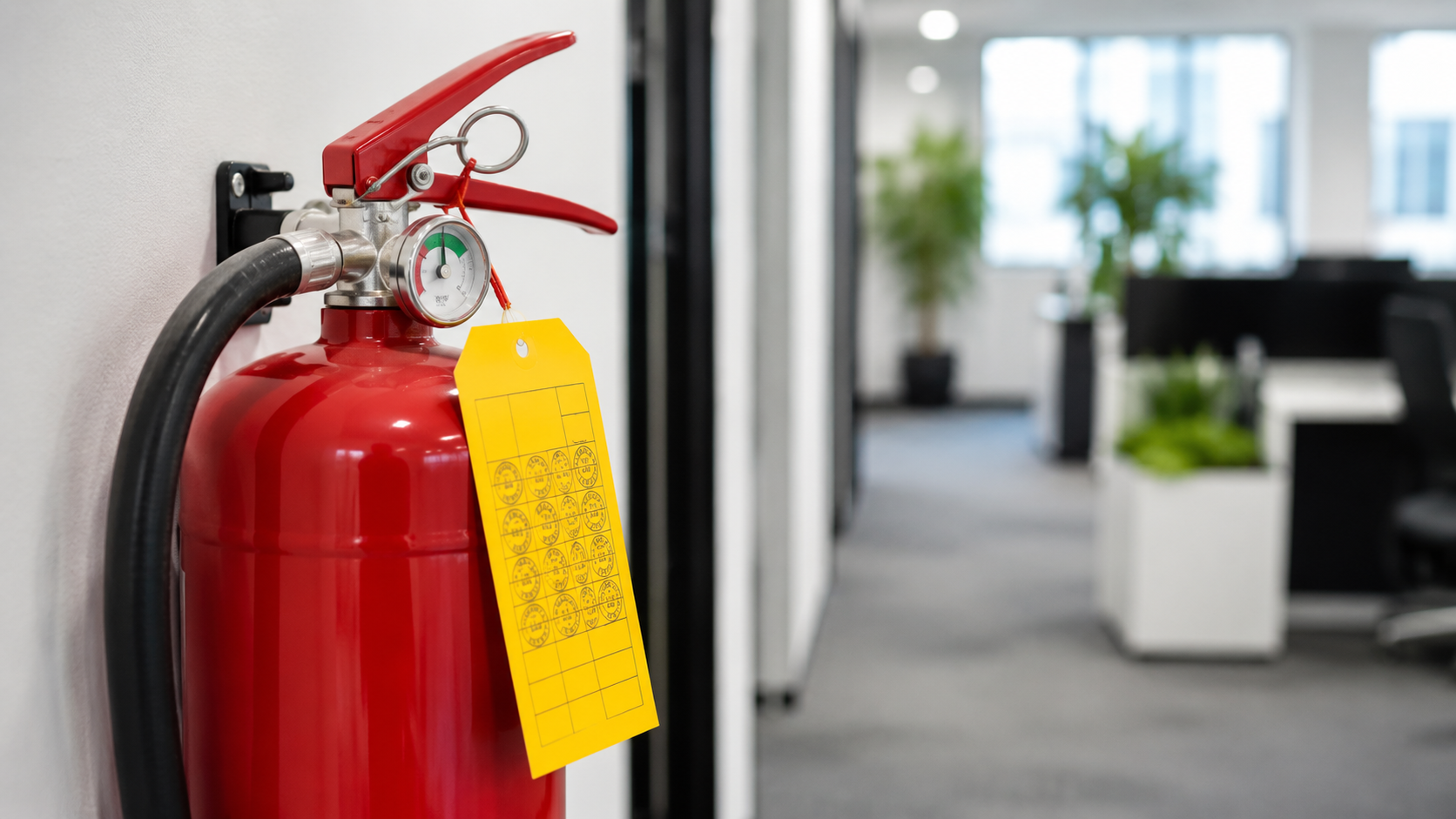
I've been working as a fire safety consultant across New South Wales for over a decade, and the single most common compliance gap I walk into, whether it's a café in Surry Hills, a warehouse in Penrith, or a strata block in Newcastle is fire extinguisher servicing that's overdue, poorly documented, or done by someone who had no business touching the equipment in the first place. So let me answer the question plainly: how often do fire extinguishers need to be serviced in NSW? Every six months, without exception, but there's far more to the story than a simple interval, and if you're a building owner, strata manager, or business operator in NSW, the rules just got significantly tighter.
This guide covers everything — the law, the schedule, the costs, the brands, and the mistakes I see repeatedly on-site.
Disclaimer: This article is general in nature and does not constitute legal, insurance, or building compliance advice. Always consult a licensed fire safety practitioner and review legislation relevant to your specific property classification. Some links in this article are affiliate links — this does not affect the price you pay.
The Legal Foundation: AS 1851-2012 and What It Means for NSW in 2026
The backbone of fire extinguisher servicing compliance in Australia is AS 1851-2012 (Routine Service of Fire Protection Systems and Equipment). AS 1851-2012 is the bedrock standard for fire extinguisher servicing, setting minimum service frequencies — including 6-monthly, yearly, and 5-yearly intervals for various types of equipment. For years in NSW, most fire protection companies used AS 1851 as a guideline rather than a strict rule. That changed significantly when the NSW Government formalised mandatory compliance.
From 13 February 2026, AS 1851-2012 is mandatory under the Environmental Planning and Assessment (Development Certification and Fire Safety) Regulation 2021. This applies to all new and existing Class 1b and Class 2 to Class 9 buildings in NSW. In plain terms, that's virtually every commercial, industrial, strata, and multi-residential building in the state. Building owners must ensure essential fire safety measures are inspected and tested in accordance with AS 1851-2012, and must keep records in the manner prescribed by the standard for at least 7 years, making those records available for inspection.
From my professional opinion, this is the most significant regulatory shift I've seen in NSW fire safety in a decade and I'm already seeing building owners scrambling to catch up.
Don't be one of them.
The 6-Month Rule Explained: What Actually Happens at Each Service
AS 1851-2012 states that all fire extinguishers must be inspected at six-monthly intervals, but what does that inspection actually involve? It's not someone walking in, glancing at your extinguisher and slapping a new tag on it or at least it shouldn't be. The Level 1 six-monthly inspection includes checks for accessibility, signage, pressure gauge readings, weight verification, and anti-tamper seal integrity.
Specifically, a compliant 6-month service should include:
Checking the pressure gauge to confirm the unit is still correctly charged
Inspecting the nozzle and hose for blockages, cracking, or deterioration
Verifying the physical weight of the extinguisher
Confirming the safety pin and tamper seal are intact and unbroken
Checking the unit is correctly mounted, accessible, and signposted
Signing and dating the yellow service tag attached to the unit
Entering the service into the building's fire safety logbook
While it's great to keep an eye on your equipment yourself, a self-check does not meet Australian Standard AS 1851. To stay compliant for insurance purposes and WHS audits, your equipment must be tagged by a qualified technician. I've seen businesses particularly small hospitality operators think a monthly visual check substitutes for a proper 6-month service. It absolutely does not.
The Full Servicing Schedule: Beyond 6 Months
The 6-month check is just the baseline, the schedule increases in complexity over time. Understanding the full maintenance lifecycle is essential for budgeting and long-term compliance, here's a breakdown of the key intervals under AS 1851-2012:
| Service Level | Interval | What's Included | Who Must Do It |
|---|---|---|---|
| Level 1 — Routine Inspection | Every 6 months | Pressure check, weight, seal, signage, accessibility, tag update | Qualified technician |
| Level 2 — Annual Service | Every 12 months | All Level 1 checks plus detailed hose, nozzle, and bracket inspection | Qualified fire technician |
| Level 4 — Major Overhaul | Every 5 years | Full discharge, internal cylinder inspection, hydrostatic pressure test, recharge | Specialist test station |
| Replacement Consideration | Around 10 years | Assess condition; many DCP units replaced rather than recertified | Qualified fire technician |
Every 5 years, most extinguishers require a hydraulic pressure test, which involves emptying the unit, inspecting the internal cylinder for corrosion, and pressure testing it to ensure it can still safely hold the required load. At this point, many business owners choose to refill or replace the unit depending on its condition.
At the five-year mark, it is often more cost-effective to replace the unit with a new one rather than refurbish it, as many manufacturers design cylinders with a five-year lifespan.
AS 1851 places significant emphasis on record keeping, all servicing must be recorded onsite via physical logbooks, maintenance tags, or stickers, and these records must be meticulously maintained and stored for seven years.
NSW-Specific Context: The AFSS, Coastal Conditions, and Why Location Matters
In NSW, fire extinguisher compliance doesn't exist in isolation, it feeds directly into your Annual Fire Safety Statement (AFSS), a legal requirement for most commercial and strata buildings. In New South Wales, extinguishers are listed as an essential fire-safety measure in the AFSS, and an accredited practitioner (Fire Safety Assessor) must verify that extinguishers have been maintained per AS 1851 before the certificate is lodged with the local council and NSW Fire & Rescue.
I’ve found working across coastal NSW regions from the Central Coast to the Illawarra environmental conditions genuinely affect servicing frequency. Salt air accelerates corrosion on cylinder bodies and valve components in ways you simply don't see in inland areas like Parramatta or Penrith. I once inspected a 4.5kg ABE unit at a marina in Wollongong that was barely 18 months old but had significant valve pitting due to salt exposure. The pressure gauge was reading fine, but the internal corrosion was a ticking clock. Over time, pressure loss, corrosion, seal deterioration, and environmental exposure can all reduce performance — sometimes without obvious external signs. This is exactly why I recommend coastal property owners discuss increased inspection frequency with their service provider.
Common non-compliance issues include extinguishers being blocked by stored goods, removed from brackets, tags missing or not updated, and incorrect extinguisher types being used for local hazards. That last one is critical in NSW's diverse commercial landscape — a wet chemical extinguisher is mandatory under AS 2444 in commercial kitchens, and a CO₂ unit is the right choice for server rooms and office environments with electrical equipment.
What It Costs: Realistic Pricing for NSW Businesses in 2026
One of the questions I get constantly is: "How much should I be paying?" The honest answer is that pricing varies based on the number of units, their type, your location within NSW, and which service provider you use. Here's what I've seen in the field and what's publicly listed by reputable NSW-based suppliers.
For routine 6-monthly tag-and-test servicing, most reputable NSW technicians charge between $15–$30 + GST per extinguisher, though minimum call-out fees typically apply. For new unit supply and installation in Sydney, prices for installed units range from a 1kg ABE DCP powder extinguisher at $70 + GST up to a 4.5kg ABE at $200 + GST and CO₂ units starting at $220 + GST — all including delivery, installation, signage, wall bracket, and initial tags.
For purchase-only online options, Fire Extinguisher Shop stocks dry chemical, CO₂, wet chemical, foam, and water extinguishers, all compliant with AS/NZS 1841, with prices starting from $26.90.
In terms of extinguisher types and typical purchase price ranges in Australia:
Dry chemical (ABE) extinguishers: effective for Class A, B, and E fires, ranging from $50 to $150.
Carbon dioxide (CO₂) extinguishers: designed for electrical fires, priced at $200 to $275.
Wet chemical extinguishers: specifically for Class F fires, costing between $110 and $250 — essential for any NSW café, restaurant, or commercial kitchen.
You can browse and purchase compliant units from a number of different fire equipment retailers, and national service providers like → FireSafe can handle both supply and ongoing servicing under a managed contract.
In my professional opinion, the smartest move for any NSW business owner with five or more extinguishers is to sign a managed service contract. A contract for regular servicing means all services are carried out at the correct intervals automatically, with no trying to remember what service was done when or searching for paperwork — it just gets done.
The Consequences of Non-Compliance: Insurance, WHS, and Real-World Risk
I want to be direct here, because I've sat in rooms with building owners who found out the hard way. The cost of failing to service extinguishers isn't just financial fines it's potential loss of life, injury, property damage, business interruption, and reputational risk. Non-compliance can also lead to penalties under workplace health and safety (WHS) laws. NSW WHS fines for Category 1 breaches can reach into the hundreds of thousands of dollars for corporations and that's before you factor in civil liability.
The insurance angle is just as critical. Failure to maintain servicing records can expose a building owner to compliance risk, insurer refusal, or fines in case of a fire. In the event of a fire and insurance claim, the insurer may question whether the extinguisher's servicing regime was up to date, and a documented servicing history is your best protection.
More than 95% of fires are reportedly extinguishable if the correct extinguisher is used promptly. According to Fire & Rescue NSW, they responded to 20,727 fire incidents in 2023/24. A correctly maintained extinguisher in the hands of a trained person can prevent what becomes a catastrophic loss, a dud unit in the same situation is worse than having nothing, because it creates a false sense of security.
One case that has always stayed with me: I attended a post-incident review at a small manufacturing facility in Western Sydney where an electrical fire in a switchroom was met with a CO₂ extinguisher that had been tagged but whose gauge had crept into the red zone between services. The unit discharged weakly and the fire spread. The building owner's insurer denied a portion of the claim because service records showed an 8-month gap between inspections. That gap cost hundreds of thousands of dollars. → Firesafe offers digital logbook tracking that can prevent exactly this scenario.
Frequently Asked Questions
Does the 6-month servicing rule apply to home fire extinguishers in NSW?
AS 1851-2012's mandatory 6-monthly servicing requirements technically apply to Class 1b and Class 2–9 buildings, which means most standalone residential homes (Class 1a) are not legally required to follow the same commercial schedule. However, the FPA Australia and Fire & Rescue NSW strongly recommend that homeowners have their extinguishers inspected by a professional at least annually, and self-check them monthly. If you have a home-based business, the rules change — consult a licensed fire safety practitioner. For residential extinguisher purchases, units are available from → Bunnings Australia and specialist suppliers starting from around $35–$80 AUD.
Can I service my own fire extinguisher in NSW to save money?
In order to comply with Australian Workplace Safety Standards, it is mandatory for portable fire extinguishers to be regularly inspected, tested, and serviced by an accredited professional. You cannot legally self-certify a service under AS 1851-2012 for commercial premises. A self-check does not meet Australian Standard AS 1851. To stay compliant for insurance purposes and WHS audits, your equipment must be tagged by a qualified technician. I get the temptation to cut costs, but this is genuinely one area where the false economy can cost you your insurance cover when you need it most.
What happens at the 5-year service — and is it cheaper to replace than overhaul?
Australian Standard AS 1851 requires that most fire extinguishers be emptied and pressure tested every 5 years. They are emptied, then undergo an internal inspection for any faults. If they pass, they are filled with water and pressure tested for leaks. If deemed functional and safe, the extinguisher is reassembled, refilled, and stamped with a test date. In practice, for common 4.5kg ABE DCP units, the cost of a full 5-year overhaul (labour, parts, recharge, and certification) often approaches or exceeds the cost of a new compliant unit. From my experience, most clients in NSW opt for replacement at the 5-year mark for standard ABE units — it gives you a fresh cylinder, updated manufacturing standards, and a reset service history. For larger wheeled units or specialist extinguishers like CO₂, overhaul is more commonly the economical choice.
How do I check whether my fire extinguisher service provider is qualified in NSW?
Testing and servicing must be done by qualified, accredited service providers. Building owners should check that their service provider holds the relevant accreditation, insurance, provides tagged reporting, and meets AS 1851 requirements. The NSW Government provides guidance on what the relevant accreditations are. The Fire Protection Association Australia (FPA Australia) maintains the Fire Protection Accreditation Scheme (FPAS), and I strongly recommend verifying your technician holds relevant FPAS accreditation. You can check at fpaa.com.au. Under the new mandatory AS 1851 regime in NSW, building professionals contracted to complete inspection and maintenance work must understand the requirements of the standard and hold the appropriate licences and qualifications.
Don't Let Compliance Catch You Out — Act Now
Fire extinguisher servicing in NSW is no longer a box-ticking exercise — it's a legally enforceable obligation under the Environmental Planning and Assessment (Development Certification and Fire Safety) Regulation 2021, backed by AS 1851-2012, and tied directly to your insurance validity, WHS obligations, and Annual Fire Safety Statement. The 6-month rule is the minimum, not the ceiling.
In practice, the building owners who stay ahead of this compliance are the ones who set up managed service contracts, keep meticulous logbooks, and treat their fire protection equipment as the life-safety infrastructure it genuinely is. If you're overdue, don't delay contact an FPA-accredited fire safety contractor in your area today, get your service history current, and make sure your next 6-month service is already in the calendar before you close this page.